50 Docs that Defined TIFF: Looking Back at the Toronto International Film Festival

As the Toronto International Film Festival celebrates its fiftieth edition, our writers pick fifty documentaries that helped define the festival in its first five decades.
Nifty nifty, look who’s fifty! This September marks the fiftieth edition of the Toronto International Film Festival (TIFF). After launching as the Festival of Festivals in 1976, and renaming in 1994, TIFF has earned its stature on the world stage in the face of stiff competition, a global pandemic, industry strikes, and a few controversies that completely overshadowed the celebrations—even as its golden anniversary approached.
Looking back, Toronto has long been a notable (if imperfect!) launchpad for documentary. Some major names have seen their careers grow alongside the festival, while Canadian and international documentary films have found an audience, a platform, and a route to distribution thanks to TIFF—even, in many cases, finding some little golden men along the way. Sure, documentaries have had to elbow their way into the spotlight, but TIFF’s tightly curated doc slate more is a highlight on the circuit.
In an effort to capture TIFF’s impact on the documentary space, POV endeavoured to celebrate fifty documentaries that helped define the festival in the first fifty years. This list serves not as a “best of,” a canon, or the end of a discussion. Rather, we hope that TIFF-goers find this list a source of inspiration for seeing the breadth of Toronto’s impact on documentary across five decades and as a conversation starter about great docs that screened in Toronto over the years.
Methodology
An initial long-list was drawn by consulting the history of festival line-ups. The longlist—about 315 titles, plus more entries thanks to writers checking for errors and omissions—considers feature films. Anything that received billing as a short in TIFF programmes didn’t make the tally, simply to maintain a manageable scope. But this means that great docs like Incident at Restigouche, Shooting Indians, Bacon and God’s Wrath, and Bring Me the Head of Tim Horton aren’t represented although they had some champions.
Participants were asked to winnow down the list by voting for docs that helped define the festival, whether by their artistic merits, popular appeal, critical acclaim, awards recognition, longevity, or some combination of those traits. Moreover, we accepted the tricky (and sometimes controversial) task of choosing which film to represent which filmmaker in an effort to ensure the list covered a diversity of voices. (For example, my own first ballot had four docs by Barbara Kopple.)
The survey also takes into account TIFF’s origin as the Festival of Festivals, celebrating films that might have had their world premieres elsewhere, while considering also the role of Toronto itself in the film’s overall trajectory. For example, any documentary list that blows off Grey Gardens invites scrutiny. But, realistically, the iconic doc premiered a full year earlier in New York and had opened theatrically in the USA prior to screening at the ’76 fest.
This list inevitably skews contemporary, as many early docs aren’t in circulation or widely available, while some simply haven’t aged well. TIFF’s rise on the doc front during the mid-2000s alongside industry-wide changes amid the so-called “golden era” for documentaries add to what may read like bias towards recent titles. Additionally, the nature of personal tastes and the focus on features over shorts arguably accounts for a tragic under-representation of Wavelengths here, although A Night of Knowing Nothing received a lot of passionate support. Tough choices had to be made, but there was an embarrassment of riches from which to choose. As we hope there will be in TIFF 2025’s doc slate as well! – Pat Mullen
50 Documentaries that Defined the First 50 Years of TIFF
Harlan County USA (1976)
What might documentary history be without the premiere of Harlan County USA at the inaugural Festival of Festivals? Barbara Kopple’s landmark portrait of Kentucky coal miners on the picket lines, and the stories of their wives right behind them, courageously asked every person in the theatre to choose a side. Kopple unabashedly sided with the workers and the film was better for it. The doc also featured one of the best opening sequences ever in a documentary as it highlighted the conditions in which the miners toiled and emerged soot-covered and smiling. Perhaps the most memorable moment in the film, however, besides Florence Reece’s gravelly rendition of “Which Side Are You On,” was the piercing off-screen cry of “Don’t shoot!” as the camera observed a heavy from the mining company sail past the picket lines in his truck while pointing his gun straight at the lens. That voice, Kopple’s own, showed commitment to getting the shot and standing on the side of justice that would define her career to follow. She won the Oscar shortly after wowing the crowds in Toronto, and that accolade is just one of many reasons why Harlan County endures for many critics and doc fans, myself included, as the best documentary ever made. – PM
Best Boy (1979)
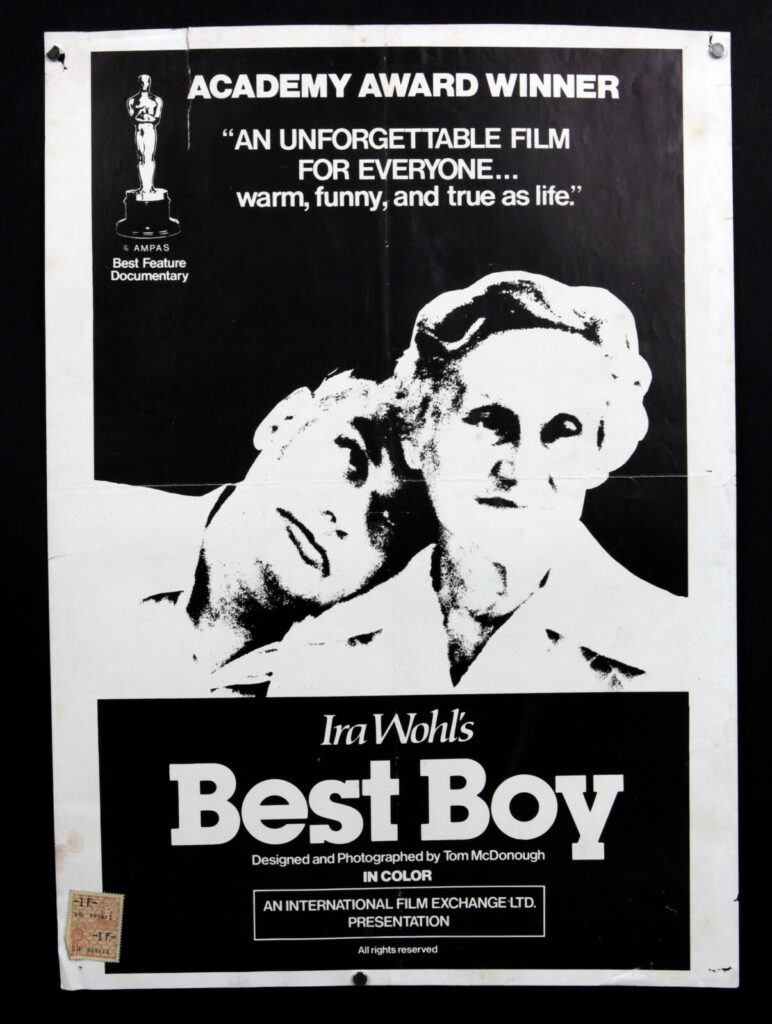
The much ballyhooed track record for winning an Oscar after scoring the People’s Choice Award started not with 1981’s Chariots of Fire, but with TIFF’s 1979 winner Best Boy: a doc. Best Boy feels a bit dated by contemporary standards, but remains notable for the ways in which it emphasizes agency for people with mental disabilities. Director Ira Wohl observes the challenges that his 52-year-old cousin Philly faces as his parents approach the end of their lives and realize that they have no plan for their son’s care when they’re gone. Wohl pulls a documentary taboo and intervenes in the lives of his subjects during a pivotal moment, and arguably saves his cousin in the process. That scene ties the film together in an extraordinarily moving way. Wohl returned to Toronto in 1997 with the follow-up Best Man, but the original remains his claim to fame. –PM
Prison 4 Women (1981)
Although they’re often left out from discussions of Toronto’s 1980s’ New Wave, the duo of Janis Cole and Holly Dale forged essential feminist views in the direct cinema tradition. Granted unprecedented access to the Prison for Women in Kingston, Ontario (the country’s sole maximum-security prison for female inmates), and armed with exhaustive research, the filmmakers’ unobtrusive yet clear-eyed
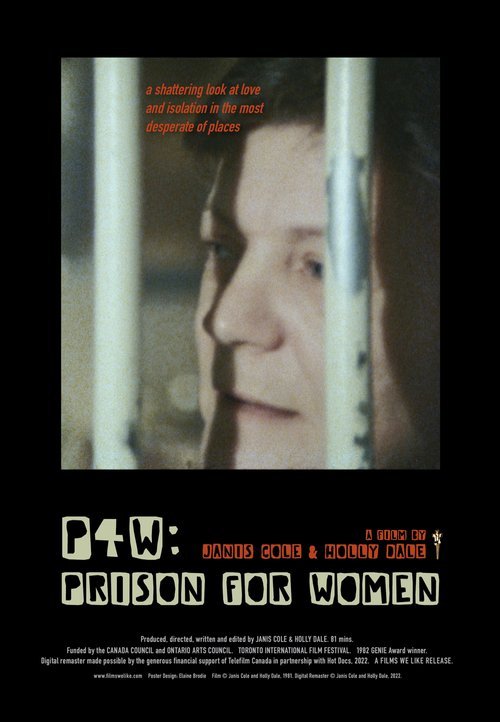
observational approach resulted in an empathetic style. Together with each subject’s candour, they crafted an acute bond with the viewer. A unique glimpse into the larger prison system, this is a gripping example of how tightly focused filmmaking can invoke a profound understanding of a broader issue. Winner of the Genie Award for Best Theatrical Documentary. – Barbara Goslawski
Stop Making Sense (1984 and 2023)
And you may find yourself writing about one of the greatest concert films of all time. And you may find yourself delighted that you got to attend the second TIFF screening of the film, watching Spike Lee dancing at his seat and experiencing a decades-in-the-making reunion of the band that was broadcast around the globe. You may ask yourself whether this is Jonathan Demme’s best, trumping the film in which he silenced lambs and secured a naked-man-with-sword trophy. This once in a lifetime musical masterpiece, with the big, bouncy suit and burning performances by Byrne, Weymouth, Frantz, Harrison and friends, proved to be spectacular when it played in the ’80s and again this decade. The restoration cemented its immortality in terms of visual and aural excellence barely contained within the vast expanse of the IMAX theatre when it returned to the festival and proved the hottest ticket in the line-up. – Jason Gorber

The Times of Harvey Milk (1984)
Rob Epstein’s documentary chronicles events in the late 1970s as Harvey Milk made history as the “Mayor of Castro Street” before winning a landmark victory as California’s first openly gay man elected to public office, only to be assassinated along with Mayor George Moscone in 1978. The film, narrated passionately by Harvey Fierstein, tells how Milk made a difference in his eleven months in office, including successfully introducing a bill to ban workplace discrimination on the basis of sexual orientation. The film remains extremely effective for its portrait of Milk’s unshakable community spirit and his ability to find solidarity between minority groups in search of equity. After moving audiences in Toronto, notably in 1984 when the LGBTQ+ community was again failed by the system amid the AIDS crisis, the doc went on to win a special prize at Sundance, along with an Emmy, a Peabody, and the Oscar. It remains as powerful as ever. – PM
No Sad Songs (1985)
Considered to be the first Canadian film about the AIDS epidemic, and one of the first in the world, Nik Sheehan’s landmark documentary captures the fear within the LGBTQ+ community and the relentless disdain from those outside, as the virus took hold in the early 1980s. An oral history of how AIDS affected individuals, their families, and healthcare workers in Toronto, No Sad Songs gives a real-time account of the devastation and panic around this time. Sheehan’s bld work endures today as an important historical document for the queer community, for Toronto, and for the world at large. – Rachel Ho
Comic Book Confidential (1988)
In an era when superhero movies have dominated the box office, it easy to forget the roots of the art form that birthed them. Ron Mann’s Genie Award-winning Comic Book Confidential firmly places the books and artist at the forefront where they belong. Offering an engaging look at the history of comics, from the 1930s to 1980s, Mann brings depth to an art that many take for granted. Once a source of amusement, the art from has provided a vessel for generation of readers to process the joys and horrors of the world and their place within it. – Courtney Small
Roger & Me (1989)
The second documentary to win TIFF’s People’s Choice Award remains one of its best victors. Michael Moore’s film shook up the nonfiction scene with its humorously confrontational nature as the director examined the fallout of General Motors’ factory closures in his hometown of Flint, Michigan and sought an interview with CEO Roger Smith. This smart and engaging game-changer frequently gets its flowers for its contribution to documentary authorship, and Moore certainly asserts a distinct rabble-rousing voice. But perhaps the reason why Roger & Me strikes a chord is due to its everyman appeal. Moore’s distinction as a filmmaker isn’t necessarily his sense of humour, but rather his unabashed affinity for the working class. Nobody else could capture the “Rabbits: Pets or Meat” lady with such respect and grace. –PM
Forbidden Love: The Unashamed Stories of Lesbian Lives (1992)
In response to criticism that the National Film Board’s famed women’s unit, Studio D, received for never having produced a lesbian-focused feature-length film, directors Aerlyn Weissman and Lynn Fernie created Forbidden Love: The Unashamed Stories of Lesbian Lives, which would go on to win a Genie and GLAAD Media Award. Weissman and Fernie interviewed lesbians who recounted their memories of growing up in the 1940s, ’50s, and ’60s across the country. Some stories recalled the heartbreak in keeping their true selves hidden, while others celebrated their courage and moments of tenderness among family and friends. The strength and humour the women brought forward made Forbidden Love a lifting experience full of optimism and hope. – RH

Manufacturing Consent: Noam Chomsky and the Media (1992)
Who expects Noam Chomsky to be headline a documentary epic? The famed intellectual fuels a thinking person’s adventure in this engrossing documentary by Mark Achbar and Peter Wintonick. Chomsky shares his perspectives on propaganda, media literacy, and corporate greed–among many other nuggets he’s considered across his expansive career. The documentary is appropriately encyclopedic in its scope and heft too, and ironically has some notes about corporate dollars and propaganda that might have come in handy for future festivals. The film received a special jury citation for Best Canadian Feature from TIFF and might be worth a look if you like this year’s TIFF doc Orwell. – PM
Kanehsatake: 270 Years of Resistance (1993)
Winner of TIFF’s Best Canadian Feature award, Alanis Obomsawin’s Kanehsatake: 270 Years of Resistance is one of the greatest films about activism ever made. Taking viewers on the ground of the Oka Crisis, where a proposed golf course to be built on Kanien’kéhaka (Mowhawk) land sparked a tense standoff, the film is an unflinching look at Canada’s continual displacement and mistreatment of Indigenous communities in the name of capitalism. Obomsawin’s film paints a stirring portrait of generational injustice and racism at all levels of Canadian society and the resilience of Indigenous people to never stop fighting for their rights and humanity. The director continued to debut numerous films at the festival, including We Can’t Make the Same Mistake Twice (2016) and Our People Will Be Healed (2018), while getting a major career retrospective in 2021. – CS
Hoop Dreams (1994)
Hoop Dreams, focussing on the preternaturally talented basketball players William Gates and Arthur Agee along their paths to presumed superstardom, is one of the greatest sports movies ever. It’s a profound work of journalism and a touchstone of the documentary form. The film directed by Steve James is also arguably the biggest non-fiction snub in Oscar history, a misfire so egregious that the Academy rewrote its nomination rules in response to the outcry. This epic work of non-fiction was birthed as a thirty-minute TV spot, yet it blossom over years in the editing room to become one of the great American films of all time. Fellow Chicagoan Roger Ebert called it “one of the best films about American life that I have ever seen.” And who in their right mind would disagree with that statement? – JG
Picture of Light (1994)
Peter Mettler’s unique gifts as an innovative director/cinematographer have been evident since his first films. His formally inventive Scissère was the first student film ever programmed at the festival (in 1982). Here he transforms a diaristic road movie into a poetic, philosophical treatise on capturing the ineffable. He travels with his crew 3000 miles north by train from Toronto, Ontario to Churchill, Manitoba in the dead of winter to film the aurora borealis. His plans derail as the camera malfunctions in the minus 40-degree Celsius temperatures, and the heavy snowfall traps them in their hotel. His meditations on both the landscape and the indefatigable characters in this isolated community blend with his penchant for lyrical visual explorations of perspective to take the film from self-reflexive rumination into eye opening insight into ways of seeing—and capturing that experience on film itself. –BG
Project Grizzly (1996)
One of the most “Canadian” films ever made, Peter Lynch’s cult classic Project Grizzly follows Troy Hurtubise, a bear attack survivor, along his quest to make a grizzly-proof suit. While we never actually see the astronaut/hockey goalie/chunky RoboCop exoskeleton go up against a real bear, watching Hurtubise and his crew test the suit against two-by-fours, falls from cliffs, and heavy trucks provides the true delight. We’ve come a long way since the humble bow and arrow, and Project Grizzly exemplifies the trial and errors of innovation that placed us at the top of the food chain — no matter how misguided or idiosyncratic they are. – RH

The Corporation (2003)
As the world continues to entrenches itself in capitalism, Mark Achbar and Jennifer Abbott’s examination of the corporation as a legal entity and member of society serves as an ominous warning. The Corporation offers a damning antithesis to the foundations of our modern society and won a Genie Award in 2005 as a result. Throughout the film, Achbar and Abbott put forth the thesis that the modern day corporation draws similarities to a clinically diagnosed psychopath. While initially seeming like a far-reaching premise, the film presents thought-provoking arguments in a persuasive and surprisingly entertaining manner that uniquely pierces the corporate veil. Abbott returned to the story of The New Corporation: The Unfortunately Necessary Sequel at TIFF 2020 with co-director Joel Bakan. – RH
Shake Hands with the Devil: The Journey of Roméo Dallaire (2004)
I had the good fortune of meeting Lieutenant-General Roméo Dallaire while I was a university student, learning of his story for the first time. In speaking with our group, his visceral descriptions of his experience and observations in Rwanda during the genocide and the weight of the decisions he made were palpable, even a decade later. Peter Raymont distills that same raw delivery in Shake Hands with the Devil. What should be required viewing for Canadians everywhere, Raymont’s film captures Dallaire’s legacy as a reminder of our duality as people: capable of unspeakable acts of violence and cruelty, and yet, the ability to confront these acts with steadfast fortitude. After debuting at Toronto, the film went on to win an Audience Award at Sundance while collecting accolades including a Directors’ Guild of Canada win, a Gemini, and a News and Documentary Emmy. – RH
Manufactured Landscapes (2006)
Jennifer Baichwal, Nick de Pencier, and Edward Burtynsky could (should?) have made this list three times with their environmental trilogy that includes Watermark (2013) and Anthropocene (2018). However, Manufactured Landscapes perhaps carries the biggest vow factor of their collaborations, which find a cinematic complement to Burtynsky’s stunning encapsulation of the scale of human influence on the environment. From that doozy of an opening dolly shot of a factory assembly line to the awesome view of the Three Gorges Dam in China, Manufactured Landscapes conjures a sense of awe as the camera moves through these vistas to immerse audiences in the sheer scale of humankind’s destruction upon the Earth. This visual essay, quite frankly, deserves consideration as one of the best Canadian films of all time. – PM
Sharkwater (2006)
Rob Stewart could easily have three entries on this list too with Revolution (2012) and Sharkwater Extinction (2018). While the latter gave a sentimental note to TIFF ’18 with its posthumous premiere after Stewart died while diving the year before, the first Sharkwater was part of an environmental doc revolution. Stewart was the perfect poster boy to engage younger audiences in this invigorating film that shared his passion for sharks and made an earnest effort to counter the narrative that these creatures are bloodthirsty predators and, therefore, unworthy of protection. Sharkwater proved a hit, netting wins at festivals across the circuit, scoring $1.6 million at the box office (pretty great for a Canadian doc) and inspiring audiences of all ages to look closer at marine life. – PM
Shut Up and Sing (2006)
Every Barbara Kopple film that played the festival received at least one vote and while one can make strong cases for the inclusion of fellow music docs My Generation (2000) and Miss Sharon Jones! (2015), her 2006 gala about the Dixie Chicks (now just “The Chicks”) fittingly captures her ability to transcend music doc convention. Kopple and fellow director Cecilia Peck use the trappings of a behind-the-scenes doc to create an explosive essay about freedom of speech when signer Natalie Maines comes under fire for dissing then-President George W. Bush. She finds her voice anew while the band records their hit Taking the Long Way album as a pointed rebuttal to the vitriol they faced. In doing so, Shut Up and Sing captures a turning point in American pop culture when polarization became an acceptable norm amid the invasion of Iraq and Bush-league politics. The film endures as a snapshot of the power of the online mob and the importance of standing your ground in the face of it. – PM
My Winnipeg (2007)
In his contemporaneous review of My Winnipeg, Xtra’s former editor Gordon Bowness expressed “shame” about Guy Maddin’s maddeningly excellent film. Despite being “arts editor of the country’s largest gay paper, a Winnipegger and historian to boot,” Bowness believed that he had been “out artied, out gayed, even out mother-fixated by a straight director and his historical fantasia.” A clearly Canadian quirk of Maddin’s film is that its internationally cherished calibre can actually make us feel bad, as we are collectively raised to never expect exceptionalism emerging from our preternaturally milquetoast nation. Bold, brilliant, bonkers, black and white, this love letter to the filmmaker’s hometown mixes style and substance, myth and fact, crafting a heady hybrid whose spell continues to enchant us. – JG
Reel Injun (2009)
Hollywood’s history with the representation of Indigenous stories and lives is shaky, but that’s great material for a documentary. Directed by Neil Diamond, Catherine Bainbridge, and Jeremiah Hayes, Reel Injun delivers a playfully wise excoriation of Hollywood’s habit for stereotyping Indigenous lives as Diamond tours the archives of old “cowboy and Indian” movies in search of positive representation. The doc arguably proved an overdue conversation starter about cinematic representation, authentic storytelling, and narrative sovereignty. Its influence is evident in docs that have followed, as well as movements to correct the lens through which people tell stories on screen. The doc went on to win a Peabody Award and a few Geminis, but the real prize was the wake-up call it inspired. – PM
Tabloid (2010)
Errol Morris has had many works screen at TIFF, including The Fog of War, The Unknown Known, and most recently The Pigeon Tunnel, but Tabloid was the first to have its world premier at the festival. As salacious and entreating as its title suggests, Morris documents how a former pageant winner, Joyce McKinney, became British tabloid fodder after being accused of kidnapping an American Mormon missionary. The truth, or at least the scattered fragments of it, are buried somewhere in Morris’ film, but deciphering what is fact and what is fiction in McKinney’s version of events is half the fun. – CS
From the Sky Down (2011)
TIFF tried to please the crowd by going fully Canadian on opening night in 2010 with Score: A Hockey Musical and even the Canucks thought they missed on an empty net. After that mistake, TIFF pivoted hard and opened the 2011 festival with a music doc, marking the first time that the festival kicked off with a documentary. Directed by Oscar winner Davis Guggenheim, a regular at the festival with docs like It Might Get Loud (2008), Waiting for Superman (2010), and He Named Me Malala (2015), this energetic and insightful rockumentary considers the enduring legacy of U2 and asks why an Irish band inspires such universal appeal. From the Sky Down might not be the best work in Guggenheim’s filmography, but it feels significant as a documentary foisted with the thankless task of opening a festival when the circuit overall treats docs as an afterthought. It proved a marvel simply by giving folks a good time. For one night, everyone in town was a Bono fan. Or politely pretended to be one. – PM
Pina (2011)
This Oscar nominated collaboration with renowned dancer and choreographer Pina Bausch was almost abandoned after her untimely death. By resurrecting it in glorious 3D as a celebration of her life and vision, Wim Wenders (an empathetic artist flexible in both fiction and documentary) succeeded in creating one of the most mesmerizing cinematic portraits of an artist. For this unique tribute, Wenders may have drawn partial inspiration from Werner Herzog’s inventive work with the medium in Cave of Forgotten Dreams released in the previous year, although stunning visuals have always been a hallmark of his films. Here, as Wenders blends dancers in both theatrical spaces and in urban landscapes, he reawakens Bausch’s artistic soul. Archival footage of the artist intertwines with her dancer’s recollections in voice over, creating a rich tapestry of languages while musical pieces intertwine and inform. It’s a complex immersive experience for the viewer, one that brings an especially profound understanding of Bausch’s far-reaching talents and modus operandi. Interestingly, seven of Wenders’ films screened at the inaugural Festival in 1976 in the New German Cinema programme. – BG
The Act of Killing (2012)
I’m sometimes asked to name the best doc of all time, or even the best horror film, and this stunning achievement tops both those lists. Leave it to a man named Oppenheimer to make a film this explosive, one that’s as compelling today as when it was surreptitiously captured on camera. This deeply affecting, profoundly unsettling work about perpetrators of the Indonesian genocide goes well beyond notions of the banality of evil, probing deeply the complexities of political violence, the way history is reshaped by victors, and the modes by which myth-making can be used as a salve for violent murderers to soothe their tortured souls. Never has a film provided a more challenging or more vital watch, and it remains a life-changing work that quietly, confidently, effortlessly expresses its brilliance in every frame. Paired with the far more taciturn sister film, The Look of Silence (TIFF 2014), and you have a double-bill that defines the heights that non-fiction excellence can achieve. – JG
Leviathan (2012)
A product of several dreams (and nightmares), Leviathan plunges the viewer into the darkness of the fishing industry. Strung together using GoPro footage of life on a commercial fishing vessel, the film by Lucian Castaing-Taylor and Verena Paravel does not favour auditory or visual navigation at any point in its 87-minute runtime. Operating as a Rorschach test of a film, it is open to interpretation with many viewers reading the film’s matter-of-fact depiction of fish-slaughter as a commentary on man’s existence as the most vicious predator entirely desensitized to his onslaught on nature. In its formally distinct aesthetic condition, Leviathan is an inimitable documentary that is simultaneously horrifying and captivating. The directors have since become festival favourites with docs like Caniba and De Humani Corporis Fabrica. – Nidhil Vohra
Stories We Tell (2012)
Canadian actor/filmmaker Sarah Polley’s fiction films have garnered accolades and critical acclaim from the start. This memoir film, her only foray into documentary (to date), was instantly celebrated as an innovative and fearless confessional and can be seen as a logical extension of her dramatic work. It confirms that no matter the genre, she is a wise, gifted storyteller, displaying great compassion for the people whose lives she enters, be it in works of fiction or in reality. In Polley’s hands, this penetrating analysis into private, hidden lives and the stories that families inevitably weave manages to skirt all the clichés of family filmmaking to take on universal significance. It won the Canadian Screen Award for Best Feature-length Documentary and both the TFCA’s honours for Rogers Best Canadian Film and the Allan King Documentary Award. The film is considered by many to be one of the greatest Canadian films of all time. – BG
Finding Vivian Maier (2013)
John Maloof and Charlie Siskel’s Oscar nominated Finding Vivian Maier offers a gripping portrait of an artist who never sought the spotlight. A domestic worker by trade, Vivian Maier’s stunning photography could have afforded her a thriving social media career today. (It helps she could take a wicked selfie.) But as it was, Maier took photos only for herself. Maloof and Siskel’s film considers the darkness of an individual brimming with artistry; perhaps the cost of brilliance that even Maier probably didn’t recognize. In a time where hobbies only seem to exist for monetization, Maier’s life story increasingly gains poignancy today. – RH

The Square (2013)
When Jehane Noujaim’s film debuted at Sundance, the filmmaker presented an optimistic vision of the Arab Spring protest movement, resulting in an Audience Award and capturing the hearts of many who saw it. Over the summer, as facts on the ground continued to shift, the film was radically reworked to present a far more complex, superior vision of the realpolitik of life in and around Cairo’s Tahrir Square. We witness cracks forming between former allies united in their commitment to change, but intractably differing into what exactly that change is meant to look like. The TIFF version is what made the film the Oscar-nominated treasure that it is, providing a journalistically sophisticated take on the manifold character of populist protest movements (presaging the response to both George Floyd’s death and January 6th). It’s a timely yet timeless rumination about the downfall of a singular regime, but equally the clouding utopic visions as reality stubbornly interferes with ambitions. – JG
National Gallery (2014)
How do you capture Frederick Wiseman’s significance in the TIFF Docs slate with a single title? Pretty much every film by Fred received a vote during balloting. My personal choice for Wiseman’s best TIFF selection may actually be his most recent one, Menus Plaisirs: Les Trois Gros, but perhaps the film that best captures the Wisemanesque nature of the TIFF Docs scene is National Gallery. This three-hour observational opus inside London’s National Gallery arguably marks something of a turning point in Wiseman’s stature in pop culture. National Gallery’s run, on the heels of At Berkley, marked a moment when the then-octogenarian filmmaker who didn’t give a toot about testing audiences’ patience became cool. Only the die hards park three to four hours for a Wiseman film when all the stars are in Toronto, and National Gallery also serves as one of Wiseman’s strongest films for its observation of the machinery of a cultural institution. It’s also perhaps the best example of the term “Wisemanesque” as his durational cinema gels perfectly with the act of strolling through a gallery and soaking up paintings for minutes on end. –PM
Hurt (2015)
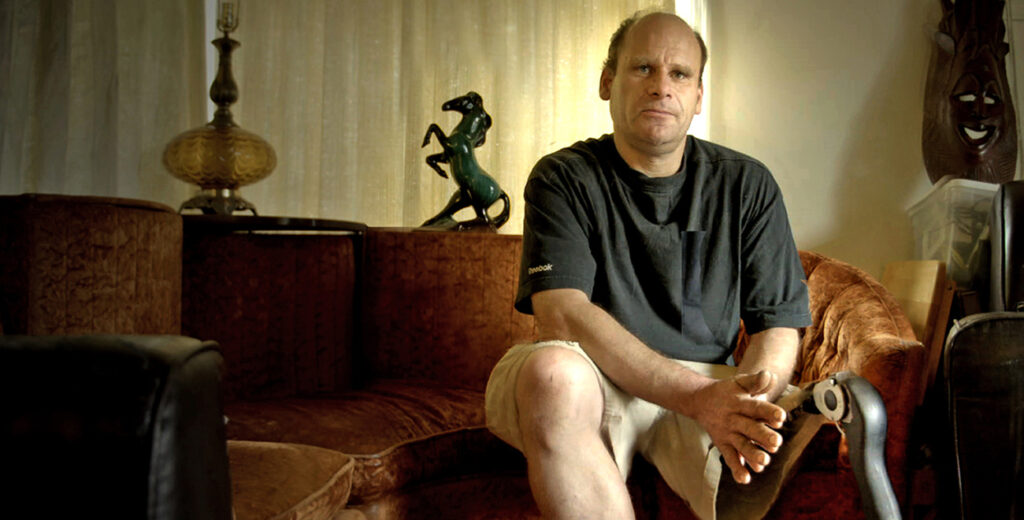
The winner of TIFF’s inaugural Platform prize, Alan Zweig’s Hurt is a moving tale about the destructive nature of addiction. Once considered a Canadian hero on par with Terry Fox, as he raised millions for cancer research via his own cross country run on a prosthetic leg, Steve Fonyo is a man with an uncertain future. Zweig film’s captures Fonyo’s struggle to break free from the inner demons that still chase him. Showing compassion for Fonyo, while acknowledging the long arduous journey still ahead, Hurt is a touching reminder that life’s path is never straightforward. – CS
No Home Movie (2015)
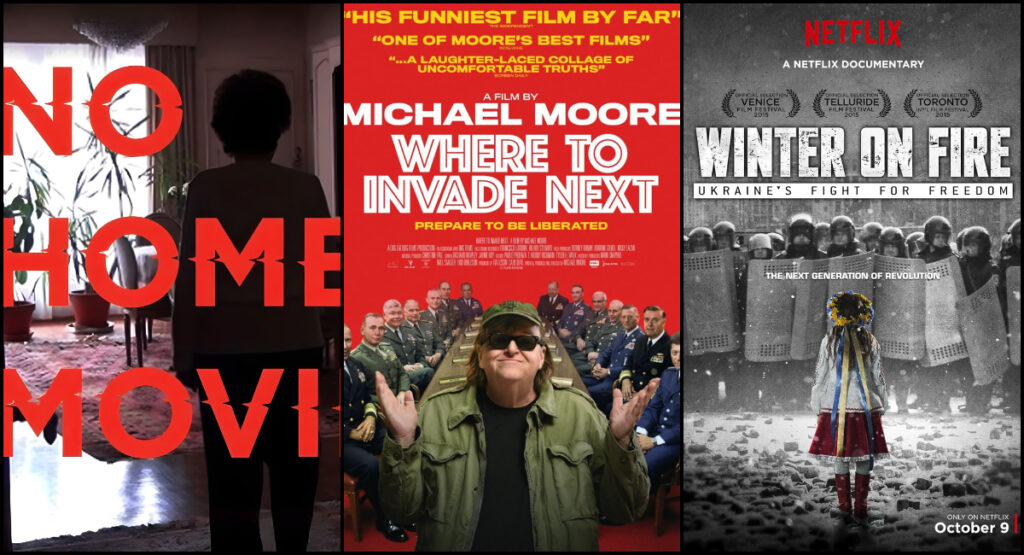
It’s rather fitting that Chantal Akerman’s last film focuses so greatly on her mother Nelly and the event that defined much of Nelly’s life. Conversations about Poland and the Second World War dominate much of No Home Movie, and through their interactions, we come to realize just how much Nelly and the Holocaust informed Akerman’s work. Nelly passed away soon after filming at the age of 86, and Akerman died by suicide just a couple weeks after TIFF’s presentation of the film in 2015, making No Home Movie decidedly difficult viewing in hindsight, but arguably, it offers the most intimate glimpse into the legendary filmmaker’s soul. – RH
Where to Invade Next (2015)
TIFF flexed its doc muscles big time with the announcement of a world premiere for a Michael Moore movie that virtually nobody knew was in the works. Moore’s hush-hush project turned out to be a secret weapon that kicked off TIFF ’15 with a splash. Where to Invade Next blew the roof off the Princess of Wales theatre with a thunderous reception on opening night that arguably stole the show from Jean-Marc Vallée’s gala Demolition. It sparked a bidding war for Moore’s playful travelogue exploring ideologies and social systems that have greatly benefited other nations and could serve as a model for the U.S. The doc marked a change of heart with a kinder, gentler Moore in place of his usual piss-n-vinegar. It had the makings for a hit, but flopped following a distribution deal over which Moore himself expressed regret. Perhaps, ironically, Moore should have listened to his wallet instead of his heart. – PM
Winter on Fire: Ukraine’s Fight for Freedom (2015)
Through on-the-ground footage and interviews with protesters and their family members, Winter on Fire acts as integral reportage of the 2013-2014 demonstrations in Ukraine against President Yanukovych’s decision to forgo a trade agreement with the European Union and instead opt for closer ties to Russia. The film’s reliance on archival footage and cell-phone recordings by demonstrators creates a distressing yet integral document of the unavoidable violence that became a norm during these protests. After winning the People’s Choice Documentary Award, director Evgeny Afineevsky’s Winter on Fire received an Academy Award Nomination for Best Documentary Feature and a Primetime Emmy Nomination for Exceptional Merit in Documentary Filmmaking. – NV
I Am Not Your Negro (2016)
Winner of the People’s Choice Documentary Award at TIFF 2016 and nominated for an Oscar at the 89th Academy Awards, Raoul Peck’s I Am Not Your Negro finds the lyricism and musicality of James Baldwin’s unfinished memoir, Remember This House. The film foregoes the traditional talking heads format and relies on archival footage from the era Baldwin lived and wrote about, as well as from contemporary history. Peck considers how Baldwin’s voice as an artist and activist finds deeper meaning and gravity as the decades wear on. Although effectively based on an autobiography, I Am Not Your Negro goes beyond one man’s experience, and encapsulates a cultural movement. – RH
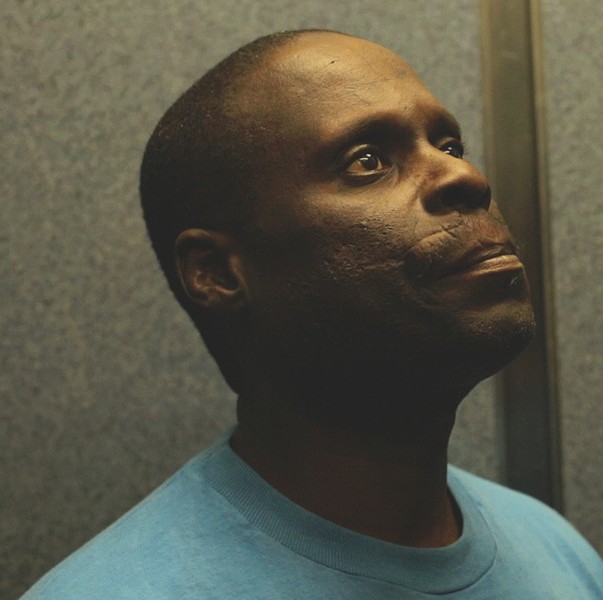

The Stairs (2016)
Hugh Gibson spent a half-decade in Toronto’s urban core, centring his story on the staff of Regent Park’s StreetHealth clinic while following a trio of individuals as the area is transformed through gentrification. We witness the struggles as community members attempt to thrive under challenging conditions, but there’s not a moment that exploits the situation to provide easy answers. In my review from the 2016 festival, I lauded the film for refusing to “offer a polemical position while offering a balanced account of the complex situation that is being dealt with.” This rare, cinematic dexterity sets the film apart. The Stairs would go on to win the TFCA’s Rogers Best Canadian Film Award, with Gibson sharing the prize money with his fellow nominees. While to this day, I think he should have kept the funds he earned for his own benefit as well as that of his direct collaborators, it’s an act of generosity indicative of the kind of deeply humanist filmmaker that we see reflected in the craft of film that got him the prize in the first place. – JG
Faces Places (2017)
Agnès Varda’s penultimate film is emblematic of her innovative and often playful approach to her subjects, be they fictional or real-life. She teamed up with the mysterious French street artist known only as JR for this richly observed travelogue through rural France. The Belgian cinema icon’s work overlapped with both the French New Wave and the Rive Gauche cinema movement. The younger JR works in photography, creating large black and white blow ups to poster across urban monuments. This is an ingenious merger of their talents and visions: interviewing everyone from coal miners to farmers, they allow each profiled subject to impact the film, while at the same time the duo adorns an edifice in that locale with a giant portrait of said individual. It’s a thoughtful insight into a developing multigenerational friendship and a compelling humanitarian statement on even the briefest of encounters. The film won the People’s Choice Documentary Award at TIFF 2017 and was an Academy Award nominee for Best Documentary Feature. – BG
Jane (2017)
Brett Morgen’s sympathetic and sublime portrait of one of the most treasured individuals on our planet doesn’t monkey around. A probing interview with the legendary primatologist is paired with a jungle’s worth of archival footage, shot by Goodall’s eventual husband Hugo van Lawick, exploring how this soft spoken yet tenacious educator and researcher quite literally reshaped the world’s perception of the apes under her patient gaze. Fierce, fascinating deeply feminist, and fuelled by a Philip Glass’s memorable score, the film manages to be both epic and intimate, a brilliantly crafted portrait of a complex woman and her love for her work that’s as engrossing and joyous as its subject. – JG
Free Solo (2018)
On the surface, the story of Alex Honnold’s quest to clamber up a granite wall in Yosemite is one of athleticism, determination, and blind hubris. If audiences got nothing more than the vertiginous vistas projected on an IMAX screen, the film would still be celebrated for showcasing some of the more legendary scenes seen in the half-century of this festival. Beyond the climber’s determination to do the near-impossible, Chai Vasarhelyi and Jimmy Chin’s magnificent film manages to provide so much more. Part relationship drama, part deep psychological portrait, the epic tale provides both a singular story of survival as well as a glimpse into what drives one to reaching for the heights without a rope. Free Solo wowed audiences and scored a People’s Choice Documentary Award before riding the love to an Oscar win. They won the People’s Choice doc prize again for the gripping The Rescue (2021). – JG
The Cave (2019)
The Cave, Feras Fayyad’s stunning follow-up to Last Men in Aleppo, is a sobering examination of the Syrian War through the eyes of an exhausted medical staff working out of an underground hospital. Winner of TIFF’s People’s Choice Documentary Award, and nominated for an Academy Award, the horrors of war are presented in stark, harrowing fashion. Observing Dr. Amani Ballour and her colleagues, as they frantically try to save lives with little resources, Fayyad reminds viewers of who the real casualties are in times of war. An unforgettable work, The Cave is an important portrait of heroism during wartime. – CS
Once Were Brothers: Robbie Robertson and the Band (2019)
There may be better films about The Band, but none manages to get as close to truth about the complex, sometimes self-serving, often fraught relationship between the Toronto-born guitarist and his bandmates. The tale of these mostly local performers who nested under the wings of The Hawk, flew off to Woodstock to work with The Joker in a big, pink house, and helped change the landscape of popular music by looking both forward and backwards at the same time, is a familiar one. However, thanks to the process of crafting a memoir, some of the veil of myth is punctured here, more so than at any time of telling before Robertson’s passing in 2023. Director Daniel Roher would go on to Oscar glory with his remarkable Navalny, but even a Russian politician seemed small fry compared to this larger-than-life rock legend who wasn’t used to accounting for his successes and failures in equal measure. – JG
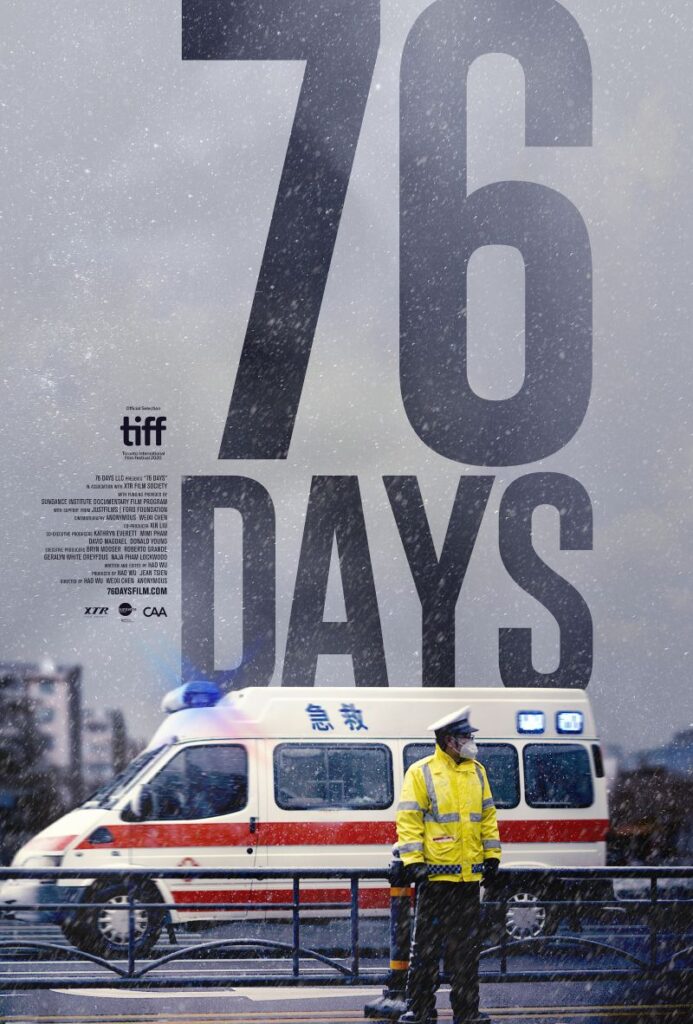
76 Days (2020)
The first pandemic-era TIFF may have been the strangest festival ever. Events mostly happened online with limited socially distanced theatrical screenings doing the best they could in one of the first major efforts at a hybrid film festival in 2020. What made the experience of watching films under lockdown especially surreal was the immediacy of a film like 76 Days. The doc by Hao Wu, Weixi Chen, and an anonymous collaborator offered a truly harrowing cinéma vérité glimpse at the earliest days of the coronavirus outbreak in Wuhan, China. It endures as an exceptional and essential document of that era. Many docs have tried to capture the pandemic in varying and often chaotic ways, but perhaps the best one stands as this all-too-soon time capsule. I don’t ever want to see it again, but happily recommend it. – PM
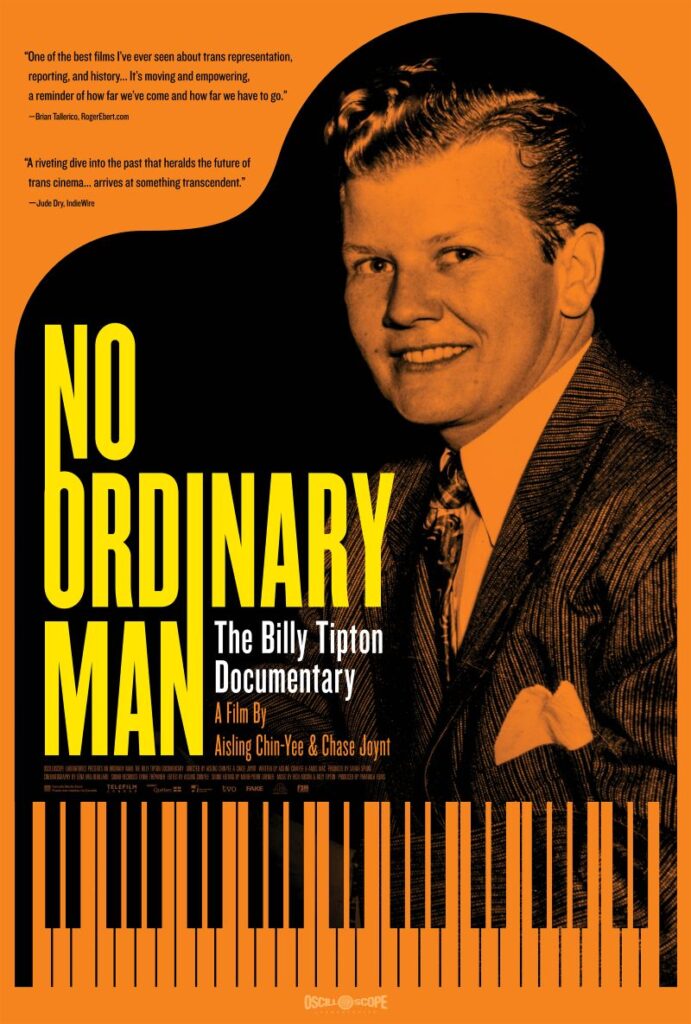
No Ordinary Man (2020)
Restoring a legacy that was unjustly erased from history, Aisling Chin-Yee and Chase Joynt’s No Ordinary Man is a moving tribute to a true trailblazer. Documenting the life of jazz musician Billy Tipton, a man who kept the fact that he was transgender from even his wife and kids, the film emphasizes the importance of finding one’s own voice. Finding inventive ways to bring texture to Tipton’s story, including enlisting trans actors and musicians to act out moments via an audition, Chin-Yee and Joynt’s documentary restores Tipton’s rightful place as an important figure in music history. – CS
Attica (2021)
Of Stanley Nelson’s expansive oeuvre as a documentarian, Attica, co-directed with Traci A. Curry, marks his most unsettling and most important work yet with an unflinching excavation of the 1971 Attica Prison uprising. Through a mix of interview and archival footage, Attica paints a grim portrait of the motivations behind the riots following absolutely animalistic treatment of the prisoners. Attica premiered at TIFF on September 9, 2021, marking exactly 50 years since the riots began in 1971, and was nominated for a collection of awards including the Academy Award for Best Documentary Feature and the Peabody Award. – NV
All the Beauty and the Bloodshed (2022)
After winning the Golden Lion at the Venice Film Festival, where it was only the second documentary to score the honours, Laura Poitras’ All the Beauty and the Bloodshed was the lone film to hit the big four that year, adding Telluride, TIFF, and New York to its laurels. Poitras’ incendiary collaboration with photographer Nan Goldin, chronicles the artist’s fight with P.A.I.N. (Prescription Addiction Intervention Now) to end Big Pharma’s “artswashing” habit of funnelling money earned from addictive substances into museums and artistic institutions. The film’s secret weapon is the artful intimacy that Poitras creates with Goldin as the photographer weaves her story and account of loss within the larger fight to hold corporations accountable for soullessly profiting off human lives—mirroring a corrective to documentary filmmaking’s own tradition for treating subjects passively. The film brilliantly intertwines P.A.I.N’s campaign with Act Up’s activism during the AIDS epidemic, which advocated that silence equals death. Goldin’s personal story adds a haunting note on this front as her slideshow bridges to a chapter of family tragedy. It’s a career-best work to date from one of documentary’s most fearless talents and, frankly, one of the best films ever to screen at the festival. – PM
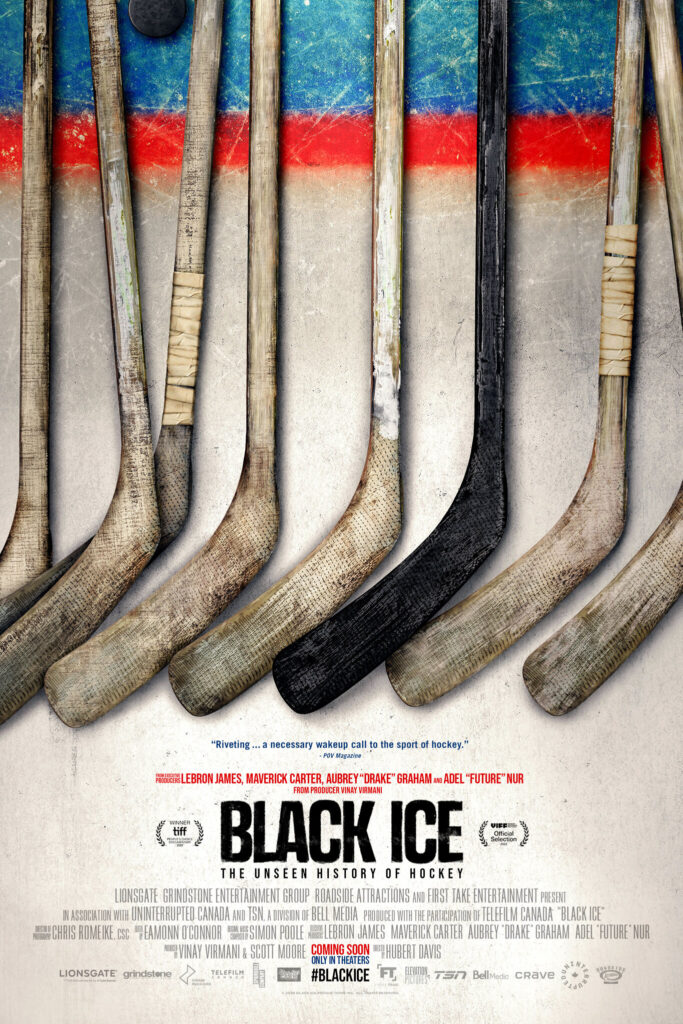
Black Ice (2022)
Winner of TIFF’s People’s Choice Documentary Award, Hubert Davis’ Black Ice offers a riveting examination of the darker side of Canada’s favourite sport. Highlighting the numerous adversities that Black athletes face at all levels of hockey, the documentary charts both the history of racism in the sport and the innovations and contributions by Black players that often go unnoticed. Davis’ film finds hope in the athletes who have paved the way for future generations while showing how everything from the way coaches interact with Black players to the way media covers Black players is often framed through an anti-Black lens. – CS
To Kill a Tiger (2022)
Nisha Pahuja’s groundbreaking documentary is as harrowing as it is inspirational. In capturing a father and daughter’s winding quest for legal justice in a corrupted-to-the-core patriarchal Indian village after the young woman survives a brutal sexual assault, the film portrays the pursuit of truth as not one grand conflict but as a series of daily conquests. Filmed outside crowded courtrooms and inside cautious huts, the camera is transporting in its visuals, sensitively conveying the raw emotions of human strength and immense mental fortitude necessary to overcome the titular beast. After winning the Best Canadian Film at TIFF 2022, To Kill a Tiger enjoyed widespread critical acclaim winning three Canadian Screen Awards and earning an Academy Award nomination for Best Feature Documentary—the first Canadian film to do so in over thirty years. – NV
Mountain Queen: The Summits of Lhakpa Sherpa (2023)
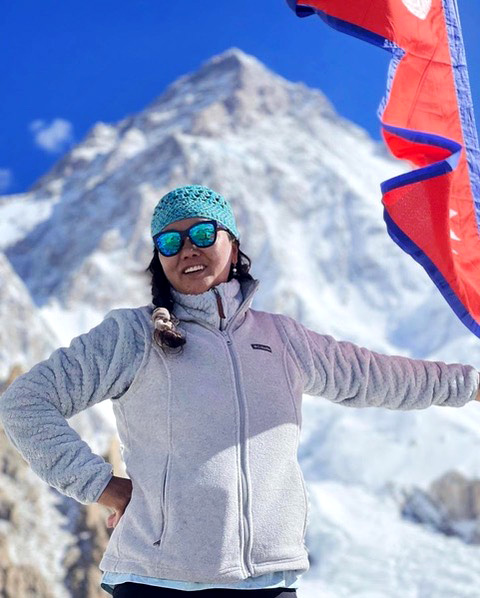
Business struggled to return to the festival in the aftermath of COVID’s disruption to the film biz. However, Lucy Walker’s extraordinary Mountain Queen scored one of the few notable sales of TIFF 2023 with a Netflix deal that proved the festival was back in business. Mountain Queen brought Walker back to Everest after her TIFF 2006 doc Blindsight and gave her a winning character in mountaineer Lhakpa Sherpa. The climb’s story, heart, courage, and sense of humour fuelled a truly inspiring crowd pleaser that drew a chorus of applause each time Lhakpa summited the mountain. Some of the best docs take audiences to places that they might never experience otherwise, and Mountain Queen transports viewers to the top of world—in more ways than one! –PM
No Other Land (2024)
This essential film is a courageous act of resistance, created by the alliance of Palestinian and Israeli journalists and activists Basel Adra, Yuval Abraham, Hamdan Ballal, and Rachel Szor as a plea for understanding. Filmed over a five-year period in the West Bank community of Masafer Yatta while Israeli soldiers forcibly displaced Palestinians from their homes, the film follows Adra as he and his family and friends resist. When journalists came to investigate, Adra and Israeli reporter Yuval Abraham formed an unbreakable bond and, under the most impossible conditions, created a collective that was able to make this film. As neighbours shared their own footage, the film’s intimacy expanded in scope. The personal is the political in this film as it zeroes in on the people suffering due to these decisions. With its audacious self-reflexive style, No Other Land becomes a rallying cry against oppression. Winner of the 2024 Academy Award for Best Documentary Feature. – BG
The Bibi Files (2024)
The documentary side of ’24 was no stranger to controversy with films like No Other Land and Russians at War—the latter of which rocked the festival in the most bizarre controversy ever.


But perhaps the hallmark of a festival handling a hot-button film well may be its success with The Bibi Files. (Noting that the film now in circulation differs from the work-in-progress cut that screened at TIFF.) Alexis Bloom’s potent look at war criminal and Israeli prime minister Benjamin Netanyahu scored a late-breaking berth—its announcement came well after ticket packages were redeemed—but it packed the theatre with highly opinionated people eager to see it and in some cases excoriate it. The post-screening Q&As were explosive, but handled with aplomb on the festival’s side, proving that audiences can indeed bring a willingness to spark civil(ish) conversation and that challenging films deserve a place in the line-up. – PM
The 50th edition of TIFF runs Sept. 4 – 14.
Related Articles
Visions of the Croisette: The Ultimate Prediction for the 2026 Cannes Film Festival Main Competition
Caught between streaming algorithms and geopolitical upheaval, does cinema’s “sacredness” still matter? A Los Angeles–based team predicts the 22 Palme d’Or contenders for Cannes 2026—from PTA and Östlund to Panahi, Rohrwacher, and beyond.
The Memory Palace: Or, If These Walls Could Talk
How films like Okuirmono, The Nest, and This House explore the histories embedded within the walls of our family homes. .

Exposing the Dark Truth of Digital Totalitarianism: Documentary 'Eyes of the Machine' Arrives in Prague as One World Film Festival Opens
Following its acclaimed premiere at IDFA Amsterdam, investigative documentary Eyes of the Machine screens at One World International Human Rights Documentary Film Festival in Prague, with Uyghur witness Kalbinur Sidik attending in person.