Home Court Review: Bouncing From Story to Story

Home Court follows Princeton Tigers basketball star Ashley Crea and the story of her Cambodian family.
Home Court
(USA, 98 min.)
Dir. Erica Tanamachi
Ashley Chea’s basketball skills became apparent early in life. As a young girl, Chea spent most of her time on the basketball court and she would eventually parlay that talent into a burgeoning high school career (and now college, as a member of the Princeton Tigers). Erica Tanamachi’s Home Court centres itself on Chea, finding threads of storytelling related to her life to create many branches for the film to explore. Because of this sheer quantity, Tanamachi’s film never quite investigates any one topic thoroughly, in spite of presenting some fascinating points of discussion.
Tanamachi gives us a glimpse into Chea’s development as a person, player, and leader. Chea’s immaturity, for example, is shown as a hindrance to her team as her on-court outbursts lead to foul after foul, while she’s quick to shed tears after big losses or when her team isn’t up to par. Tanamachi builds a unique yet entirely relatable character study that observes the challenges of growing up, especially in the world of athletics. It’s a shame that Chea’s vulnerability isn’t explored further as the discussion around what teens face today carries great poignancy.
Instead, Tanamachi spends a great deal of time on Chea’s family, specifically her parents being Cambodian refugees who fled to the United States seeking safety when the Khmer Rouge took control. Those aware of Cambodia’s history can attest to the heartbreak of this time period and what refugees like Chea’s parents sacrificed to survive. Again, this storyline in itself could be an incredible film: refugees who became business owners and whose daughter is recruited by the top colleges in the country to play ball — the modern day American dream. But in Home Court, this part of Chea’s story feels more like a segment break.
The same can be said for the palpable sadness and pain Chea harbours towards, and because of, her parents, and the briefest of dives into the history of Japanese Americans and basketball from Chea’s Coach Jayme. Tanamachi wraps up these particular stories by visiting the well-worn path of the Asian diaspora’s struggle with being Asian in a white country. While the emotions associated with this struggle are, of course, valid and real no matter how many people experience them, for a documentary releasing in 2024, it’s more formulaic than revelatory.
Undoubtedly, Chea makes for a compelling film based on her personality alone, and her family’s history only serves to elevate her individual story. What stops Home Court from becoming an all-star is a rush to fit everything into 98 minutes. Tanamachi effectively mines history lessons, think pieces, and therapy sessions to create a film profile of a student athlete, but just doesn’t provide enough space for these elements to score.
Home Court screens at Reel Asian on Nov. 17.
Related Articles

Visions of the Croisette: The Ultimate Prediction for the 2026 Cannes Film Festival Main Competition
Caught between streaming algorithms and geopolitical upheaval, does cinema’s “sacredness” still matter? A Los Angeles–based team predicts the 22 Palme d’Or contenders for Cannes 2026—from PTA and Östlund to Panahi, Rohrwacher, and beyond.

Exposing the Dark Truth of Digital Totalitarianism: Documentary 'Eyes of the Machine' Arrives in Prague as One World Film Festival Opens
Following its acclaimed premiere at IDFA Amsterdam, investigative documentary Eyes of the Machine screens at One World International Human Rights Documentary Film Festival in Prague, with Uyghur witness Kalbinur Sidik attending in person.
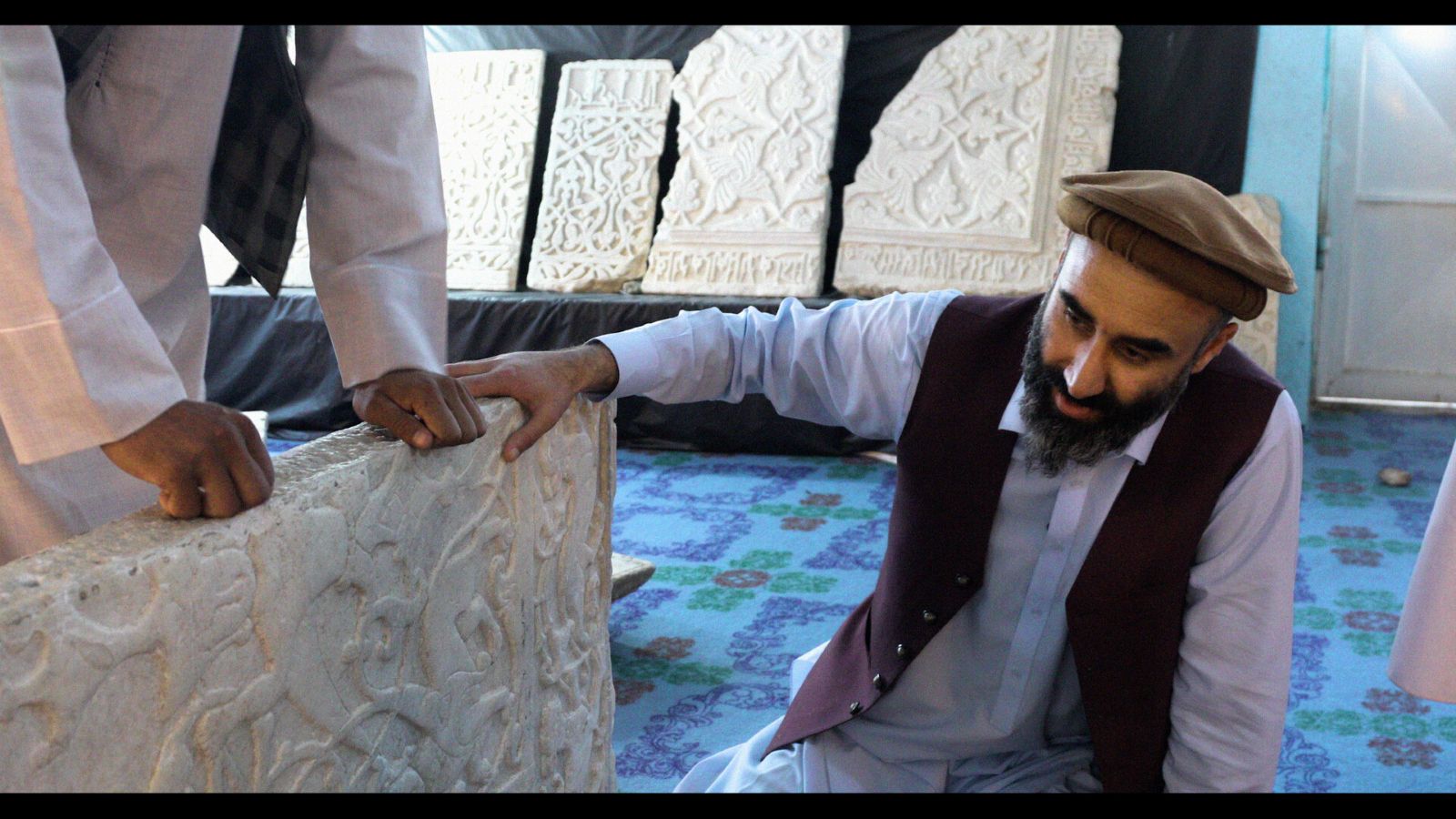
The Theft Review: Reclaiming Afghanistan’s Cultural History
Efforts to repatriate artifacts and artworks stolen from Afghanistan invite wider considerations of cultural history in Aisha Jamal's The Theft . .