How EPiC Delivers Elvis Presley’s Music with Maximal Effect

An interview with EPiC: Elvis Presley in Concert film editor and executive producer Jonathan Redmond about his electric archival portrait of the King. .
Behind Baz Luhrmann’s maximalist musical mayhem stands Jonathan Redmond. The Irish-born film editor began his relationship with the iconoclastic Aussie auteur a quarter century ago, assisting with the construction of supplements for Luhrmann films like Moulin Rouge (2001).
These making-of documentaries led to Redmond taking editorial lead on Luhrmann’s 2013 Great Gatsby adaptation, as well as the episodic series The Get Down. Redmond and his colleague Matt Villa received an Oscar nomination for the musical biopic Elvis (2022), and this project set the seeds for an ambitious non-fiction work that truly lives up to its name.
EPiC: Elvis Presley in Concert was birthed while seeking materials for the stylish biopic. Culled primarily from footage shot for That’s the Way It Is and Elvis on Tour chronicling Presley’s final chapter, Redmond’s role was to delve deeper into the man and musician behind the iconography. The result is a glorious celebration of this period of Presley’s career, perfect for fans and even those skeptical of the so-called King of Rock and Roll’s reign. Redmond’s gift for montage is on full display here, as the documentary delivers an exquisitely well-crafted ode to the power of performance with Luhrmann crediting his colleague as “the driving creative force on the project.”
POV spoke to Redmond, who also serves as executive producer on the documentary, at the Graceland Museum in Memphis, Tennessee. Surrounded by dozens of jumpsuits worn by Elvis himself, we talked about the long process of bring this film to life, the choices made to tease out specific musical elements, and the nature of collaboration between the editor and Lurhmann.

POV: Jason Gorber
JR: Johnathan Redmond
The following has been edited for brevity and clarity.
POV: How different is it cutting a documentary versus your fiction films?
JR: I’ve had a fair amount of experience with non-fiction. For various films of Baz’s over the years, I also cut a lot of the “journals,” the behind the scenes or making of’s. That goes all the way back to Romeo + Juliet.
POV: How much of the “Behind the Red Curtain” stuff is yours?
JR: Quite a lot of it. On top of editing the features, I would cut these behind-the-scenes documentaries. I worked this way on every film up to The Great Gatsby. Back then, there was so much time before a movie came out on DVD or Blu-Ray. There was always a good chunk of time if you wanted to do the extra work. Now there’s little time, which makes that workflow impossible because there’s just no gap.
POV: So, previously, most of your documentary work was directly associated with commenting on Baz’s other works. Is that a fair way of putting it?
JR: Pretty much. I did some other works as well, but the majority of it was about Baz’s films.
POV: Obviously being his cutter provides an incredibly important part of everything Baz does. It’s so editorially dense, often with a very specific style of montage. Yet with this latest film, it’s still presented as “Baz Luhrmann’s EPiC”…
JR: …It is, yeah.
POV: But I see your DNA all over this. Is that a fair thing to say?
JR: Yes, it is, absolutely. Baz has been very generous in terms of sharing the credit regarding the making of this film. We made this together, but he wasn’t in the editing room all the time.
POV: What is the thing we may misunderstand about the maximalist aesthetic of Baz? I think that you as an editor are going to see the experimentation. You thread a very narrow needle between an onslaught of imagery and narrative coherence. Can you talk about how much of that comes from interaction between the two of you, and how much of that is you as the editor dialing back some of his impulses?
JR: It’s a combination of different things. I’ve worked with Baz for so long that to separate his style versus my style is sometimes hard for even me to wrap my head around.
POV: But are you ever bad cop to his good cop? Are you ever dialing things back because you are focused on the audience more than he’s focused on us, or is that simplistic?
JR: It can go both ways. Sometimes, he’s good cop to my bad cop!
POV: Editorially you’re crazier than he is?
JR: Sometimes, yeah, and absolutely. Baz will argue that we don’t need to slow down to say something or to make a big deal of a particular moment because the audience will get that already. At times, we don’t have to say much. But sometimes, it’s the other way around. It’s a real dance, I think, and his maximalist style has very much worn off on me. In terms of his style, there’s always a musicality to everything. With music, there’s a tempo that you can add a piece of music and you go, “Oh, let’s cut to the beat.” Everything has a natural tempo that exists in Baz’s head.

POV: One would think that everything is at 250 bpm, slamming your head against the wall. Yet you have moments of balladry, you have moments where things get quiet. I want to talk specifically about EPiC where you strip out all of the instruments and it’s just a voice. Visually, things are going on, you see the musicians playing, but all you hear is Elvis. Let’s talk about those types of moments where you dial back to focus on something narratively, but also musically.
JR: In terms of Elvis’s vocals, they’re so fabulous. We were looking to have lots of multi-tracks for the performances, the “DNA” of these recordings. We were fascinated to strip out everything and just hear Elvis’s voice. He might be doing cartwheels across the stage, and he’s still pitch perfect. There’s no wrong notes in Elvis’ singing, and that’s what I found wild. We worked together with the tremendous music team, who fully embraced the idea of these very deliberate moments to showcase how extraordinary he was.
POV: I say this with utmost respect: There was a real danger hearing about this that we were going to go overboard with the Luhrmann-ization of all of this, that suddenly it was all going to be dance tracks and that we were going to do the “Little Less Conversation” mega-mix-y-ness of it all.
JR: We did some, I think, quite successful experiments in the movie. If we take a step back, one of the places where this idea for EPiC was born was in pre-production on the feature [dramatic] film. We’d seen all of this footage for research, and we knew there was something special there. But at the time, we were having this philosophical discussion on the approach to the music in the movie, about how sacred do we need to be to Elvis’s voice. We weren’t going to just add bits that were unmatched to Elvis singing on stage, we knew that. What it came down to was that when he was on stage we needed to be respectful of Elvis’s music.
Yet with the in-between moments, that’s where things got a bit more creative. We had the DNA tracks where we might take the bassline from one track and take the vocals from two or three songs and create something new. I think these were quite respectful choices. Take the Beatles’ song he covers – we weren’t being completely “Luhrmann-esque,” as you put it, and not doing that all the time. But when it came to this film, and the idea behind this film, we thought, “Well, why don’t we have our cake and eat it too?” We felt able to make this more musically experimental, in a secondary, supplemental project to the movie, with performance footage and also these experimental DNA tracks as well. It was all about finding the right balance, which I think was your point. That was very important, because the one thing, we wanted to make this movie something for everybody. We wanted to make it for the music fans, but we also didn’t want to get criticism for, “Hey, this is sacrilegious.”
POV: There’s a real danger it can be hagiography, or that it can be self-indulgent.
JR: Absolutely. We were trying to thread that needle, find the right balance, and to maximize the music that’s there. We did small augmentations. For example, there’s the backup singers, the Sweet Inspirations. We see them clapping, but on the tracks we couldn’t hear them clap.

POV: You also put the claps in the surround mix, the claps almost become like the audience clapping. A lot of those auxiliary elements that I’m hearing musically, you’re adding to the auxiliary surround mix, integrated but still separated.
JR: That’s exactly right. We originally had sound engineers and sound editors in Australia do the claps, but we didn’t want it to be some white guy in Australia filling in for Sweet Inspirations! So we got a gospel band in Nashville to re-record the claps. You know, with Baz, while some of his ideas are crazy, but he’s very authentic and wants to do things properly.
POV: How good of a listener is he?
JR: Oh, a very good listener. But ultimately, he’ll do what he wants to do.
POV: What’s the order of assembly? Are you actually doing any of the sound montage for lack of a better word, of taking an existing song and remixing it as a song, or is that coming from the music department and then you’re cutting to that?
JR: It’s a bit of a collaborative process. For example, looking at the little bits of the “American Trilogy” towards the end of the film, there’s a bit of Elvis talking about a poem. I might [do a] rough mix [of] the track, and then hand it to our music editor and then he’ll musicalize it, and back, and I’ll change it again, and so forth. It’s a back and forth.
POV: On a deeply nerdy level, you are always doing this on [picture editing program] AVID, you are never going into [music editing program] ProTools and messing around from an audio perspective?
JR: Not personally. But my team is.
POV: Is there part of you that wants to fully do your own musical remixes?
JR: Not really!
POV: Because the visual element is so tight with your aesthetic?
JR: Yeah, it’s a hybrid of the two. One plus one equals three when it comes to music and picture working together. This enhances them both. I feel quite satisfied with what I bring to the musical construction. The opening of Elvis, the fictionalized film, starts with “Also sprach Zarathustra,” which goes into “An American Trilogy.” For that project, I started with a pitch reel I did over 12 years ago where I cut the two songs together, which then became the basis for the documentary as well. It’s exciting! Some of the experiments I do musically end up in the soundtrack. The opening of the film came from my reel, and the closing of the film, “Unchained Melody,” also came from one of the experiments I was doing in post-production. Some of these musical picture experiments go into the script which then became the fiction film, so that’s very satisfying.

POV: There must be a real satisfaction to see a decade-old now seeing fruition.
JR: Oh, absolutely. When I originally put together the opening for Elvis, we had this producer who said it’s going to cost like $15 million to recreate that sequence with this movie during what we call a “white heat moment” with a young Elvis. He was right, and we cut most of it! [Laughs.] But, finally, he came around. The beginning of this movie, EPiC, changed a lot over the course of editing it, but we kept coming back to what worked so well. If it’s right, it merits the budget of $20 million or whatever the previous feature was. It made everyone excited and if it’s not broken, why fix it?
POV: Did you begin with this opening montage?
JR: It wasn’t the very first thing I did because I knew it was going to be difficult to do. The first thing I approached with EPiC was kicking the wheels on all of the performances. I cut over 100 different performances – soft cuts, rough cuts – just to go, “OK, these are the ones I think we should use.” There were five different versions of each song. So I might have five approaches to a song on a sequence.
POV: Stacked and synched in your editing program?
JR: No, because they won’t synch. There was never a performance of the same song exactly the same each time. He would change the tempo mid song, so they didn’t always synch up.
POV: But you had a playlist.
JR: I had a playlist, but there’s a background beat that, again, came from the reel I did 12 years ago where I had a version of it already constructed. It’s a case of expanding upon that, of using Elvis’s own voice which we didn’t have back then, and flushing it out. It was a heavy lift, and again, it was another opportunity where we have our very close relationship with our music editor. I was using too much music: I had over 100 cues! My music supervisor told me that I was using 99 cues in this film. I said, “Give me 10 minutes and I’ll add another, I’ve got to break that 100!”
Elvis’s music is not cheap, so one of the reasons this film hasn’t been made before is that the musical wealth will kill the budget, especially with the way I use music, where it’s using it recurring and slamming throughout. That was a challenge. We eventually got it down to 70-something cues.
POV: We’re here speaking from Graceland, surrounded by the man’s possessions. Obviously you have a strong connection now with all of this Elvis iconography, so how, do you feel that this film separates the man and his music from the man and his iconography?
JR: No, I don’t think it does fully separate those two things. It does a little bit. Baz and I coined this phrase while we were making this film: “It’s in the cracks you see the light.” We focus on moments when he’s not conscious of where the camera is, when he’s not performing. There’s these in-between moments where he’s funny. You can see, well, I don’t know whether it’s truth, but he looks genuine and he looks happy. It’s moments like these that previous filmmakers had access to, but they didn’t use them. It think maybe they weren’t allowed to use it, I don’t know. But we leaned into it. It adds an important character to the god performing on stage and showing up.
EPiC: Elvis Presley in Concert opens in IMAX cinemas on Feb. 20.
It expands the following week.
The post How EPiC Delivers Elvis Presley’s Music with Maximal Effect appeared first on POV Magazine.
Related Articles
Visions of the Croisette: The Ultimate Prediction for the 2026 Cannes Film Festival Main Competition
Caught between streaming algorithms and geopolitical upheaval, does cinema’s “sacredness” still matter? A Los Angeles–based team predicts the 22 Palme d’Or contenders for Cannes 2026—from PTA and Östlund to Panahi, Rohrwacher, and beyond.
The Memory Palace: Or, If These Walls Could Talk
How films like Okuirmono, The Nest, and This House explore the histories embedded within the walls of our family homes. .
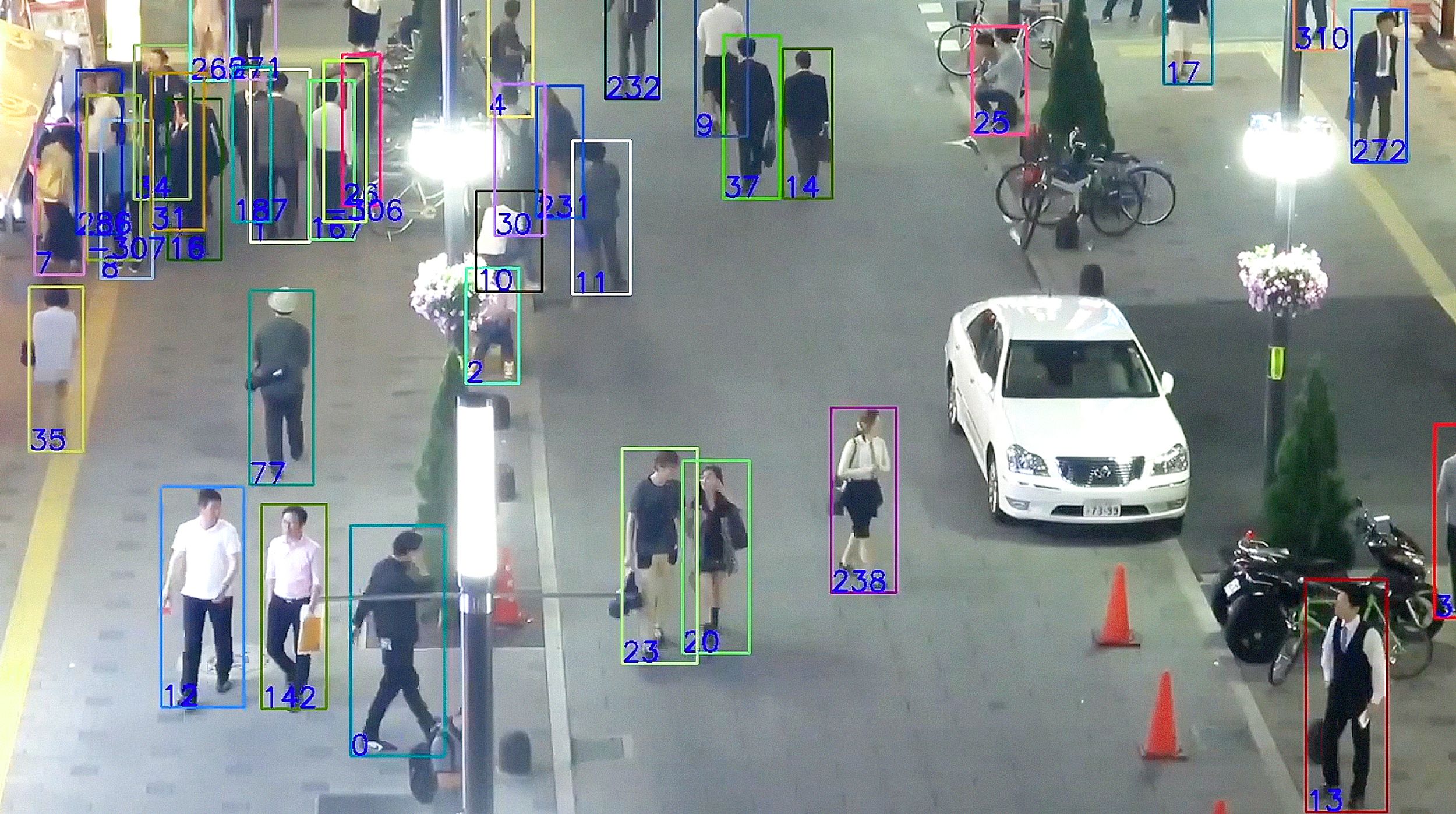
Exposing the Dark Truth of Digital Totalitarianism: Documentary 'Eyes of the Machine' Arrives in Prague as One World Film Festival Opens
Following its acclaimed premiere at IDFA Amsterdam, investigative documentary Eyes of the Machine screens at One World International Human Rights Documentary Film Festival in Prague, with Uyghur witness Kalbinur Sidik attending in person.