Remembering Frederick Wiseman, Documentary Master

Remembering Frederick Wiseman, the director of documentaries including Titicut Follies, National Gallery, Menus-Plaisirs: Les Troisgros , and other "Wiseman-esque" films. .
Veteran documentary filmmaker Frederick Wiseman has died at age 96. According to La Monde, he passed away at his home in Cambridge, Massachusetts on Monday, February 16. The cause of death has not been disclosed. A joint statementhttps://zipporahfilms.com/ from his family and his production company Zipporah Films, named for his late wife of 65 years, said that Wiseman “considered Cambridge, MA, Northport, ME and Paris, France his homes.” The family and Zipporah Films ask that fans remember Wiseman by supporting local PBS affiliates and independent bookstores.
Throughout several decades as a director with a singular eye and unparalleled humanist vision, Wiseman achieved a feat that few filmmakers enjoy. His name became synonymous with a distinct style of filmmaking. Over the years, new generations of audiences expressed their appreciation for “Wiseman-esque” films that drew them into the worlds of characters and the institutions they inhabited, often drawing upon tricks to cinéma vérité to give a sense of an objective viewpoint, but actually using the powerful choices of observational cinema to train the camera towards subjects often overlooked by the everyday eye.
He consistently favoured the observational approach, but resisted classifications of “fly on the wall” and objective filmmaking, insisted that where the trained the camera was a conscious choice. Having more discerning taste than a fly, and keeping his hands across all stages of production as director, producer, editor, and, in many cases, sound recordist in a career with an output of nearly a doc year, became doubly impressive as Wiseman’s confidence with the material matched his trust in the audience to stick with it. Over the years, “Wiseman-esque” cinema evolved to meld this observational power with the best elements of durational cinema to create long-form documentaries that truly immersed audiences in the magic of daily life.
Wiseman was born in Boston on January 1, 1930 and took an unconventional path that shaped his vision as a filmmaker. He studied arts and law, earning degrees from Williams College and Yale in the 1950s and then taught law in Boston. However, he brought this experience to his documentary filmmaking and emerged amid the 1960s’ cinéma vérité revolution at a time when new modes of technology and contemporary attitudes opened avenues for artistic sensibilities such as his own.
His first feature as a director, Titicut Follies, took audiences inside Bridgewater State Prison for the Criminally Insane. The unflinching film turned the camera towards the reality of institutions for people experiencing mental health crises, showing audiences the shockingly inhumane conditions in which patients lived in varying states of, at best, neglect. Wiseman’s unwavering commitment to capture the reality of the institution mortified the higher-ups at Bridgewater and, once politicians further in the food chain became involved, the film was censored, aside from screenings to professional groups as per the initial ruling. As Geoff Pevere wrote in POV #107, “It was said to be the very first movie banned in America for reasons other than obscenity or national security.” Titicut Follies eventually saw the ban lifted in 1991 and enjoyed newfound appreciation.
“Instead of offering a portrait of a system working to address a problem, Wiseman had made a movie about how badly vulnerable and sick people were being treated by their own government. He’d made a devastatingly effective movie that showed mentally ill people being treated like animals,” wrote Pevere in POV. “Worse, he’d made a movie that suggested the real animals were the staff, while the real people, in the sense of being so flagrantly worthy of our sympathy and outrage, were the poor souls who found themselves locked up at Bridgewater. This was One Flew Over the Cuckoo’s Nest without the fiction or implied redemptive catharsis.”
Wiseman continued to tackle various forms of institutions with this ability to capture systems of daily life in motion. His docs observed the machinery of human life as everyday people—labourers, patients, patrons—frequented places that fuelled their days: schools, hospitals, libraries, and theatres, among other venues where stories collided. Films like High School (1968), Law & Order (1969), Hospital (1970), Welfare (1975), The Store (1983), Public Housing (1997), Domestic Violence (2001), In Jackson Heights (2015), and City Hall (2020) found great power in the quotidian and the impact that simple decisions at institutional levels could have on every day people.
In his later years, Wiseman delivered an especially strong arc in his body of work by focusing on artistic and cultural institutions. His 2014 film National Gallery may be his masterpiece, or at the very least perfectly encapsulated “Wiseman-esque” cinema. The film took audiences inside London’s national gallery and uses the power of durational cinema to replicate the experience of passing through an art gallery, basking in the aura of paintings before one’s eyes, deriving meaning from them, and moving along to appreciate the next piece. The film captured the machinery of the museum in all its grandeur as it took in the passion of the curators who explained and contextualised the pieces in the collections to patrons, and all the hands involved in mounting a collection. The film was picked by POV as one of the top docs that defined the Toronto International Film Festival.
Wiseman was a regular on the festival circuit, as his films were best served by festival audiences where they had space to breathe and spark passionate discussions. His later films like At Berkeley (2013), Ex Libris: The New York Public Library (2017), and Monrovia, Indiana (2018) demonstrated the timeless power of a technique that evolved across seven decades.
His final film, Menus-Plaisirs: Les Troigros premiered at the Venice and Toronto film festivals in 2023 and showed an artist who was still at the top of his game. The four-hour epic invited audiences to enjoy a meal at the restaurant in Roanne, France. The film took about as much time to enjoy as it did to savour the small plates in the Micheline-starred eatery. Wiseman showed how each artistic creation found its way to the plate with the camera observing all aspects of the harvesting, preparing, cooking, plating, serving, and savouring. The extended sequence with the cheese cart might be one of the finest moments of Wiseman’s sense of human peeking through the frame as patrons delighted in choosing smelly and gooey cheeses. For all his ability to deconstruct the failures of social systems, Wiseman also displayed a masterful ability to discern the simple pleasures in life. Menus-Plaisirs won the New York Film Critics’ Circle Award for Best Non-Fiction Film.
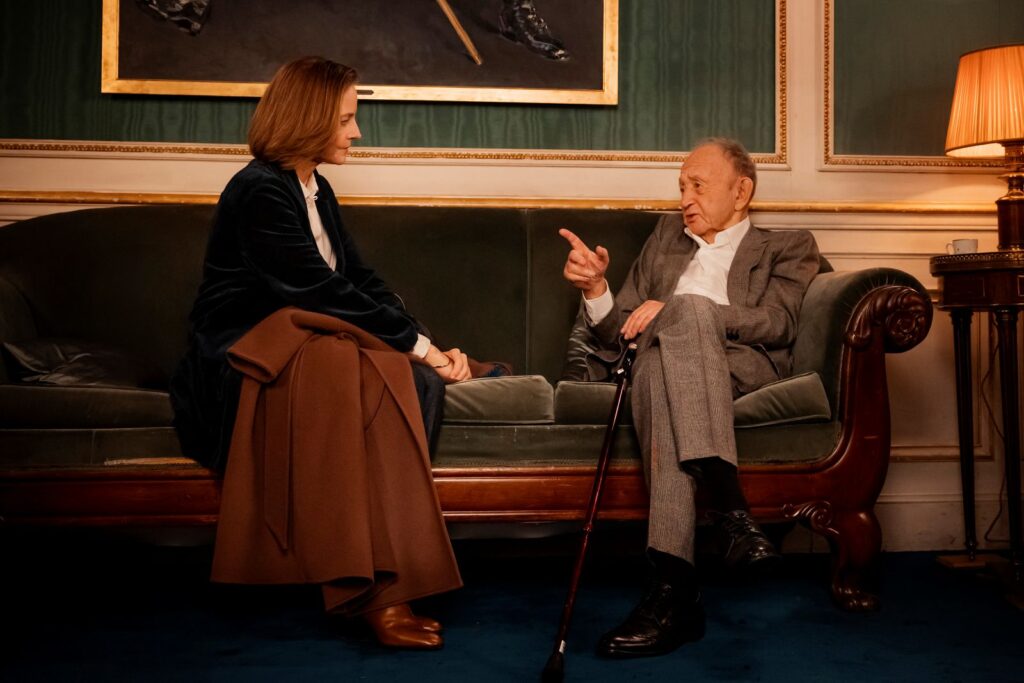
In later years, Wiseman enjoyed some roles in front of the camera. He made several small appearances, mostly in French films as he lived in Paris. His impressive onscreen turns included playing a gynecologist in Rebecca Zlotowski’s Other People’s Children (2022) and a cruel therapist in her film A Private Life (2025) opposite Jodie Foster, which was released in theatres last month. Zlotowski said she cast Wiseman in these roles as a nod to a figure who explored institutions through his films. “He’s like the record of what’s vanishing right now,” Zlotowski told POV at TIFF in September. Wiseman also played an offscreen radio announcer in the 2025 baseball drama Eephus.
Wiseman was widely regarded as a master of documentary, receiving an honorary Oscar in 2017 with the Academy citing his “masterful and distinctive documentaries examine the familiar and reveal the unexpected.” He won three Emmy Awards during his career, one for Law and Order (1969) and two for Hospital (1970). He received the Career Achievement Award from the International Documentary Association in 1990, a Peabody Award in 1991, a Lifetime Achievement Award from the News and Documentary Emmys in 2010, a career Golden Lion from the Venice Film Festival in 2014, and the Golden Coach award for lifetime achievement at the 2021 Cannes Film Festival. But few honours compare to one’s name being synonymous with documentary form.
The post Remembering Frederick Wiseman, Documentary Master appeared first on POV Magazine.
Related Articles
Visions of the Croisette: The Ultimate Prediction for the 2026 Cannes Film Festival Main Competition
Caught between streaming algorithms and geopolitical upheaval, does cinema’s “sacredness” still matter? A Los Angeles–based team predicts the 22 Palme d’Or contenders for Cannes 2026—from PTA and Östlund to Panahi, Rohrwacher, and beyond.
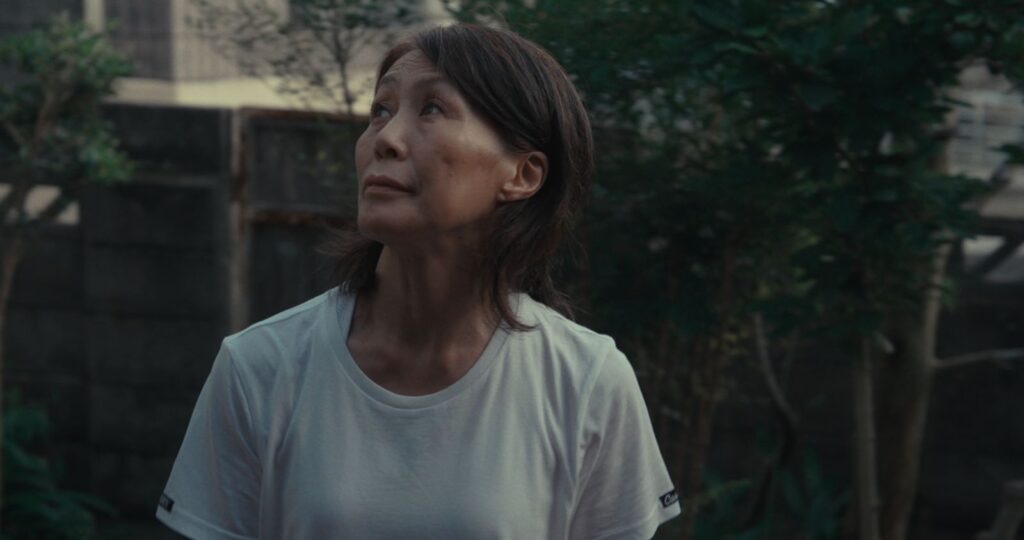
The Memory Palace: Or, If These Walls Could Talk
How films like Okuirmono, The Nest, and This House explore the histories embedded within the walls of our family homes. .
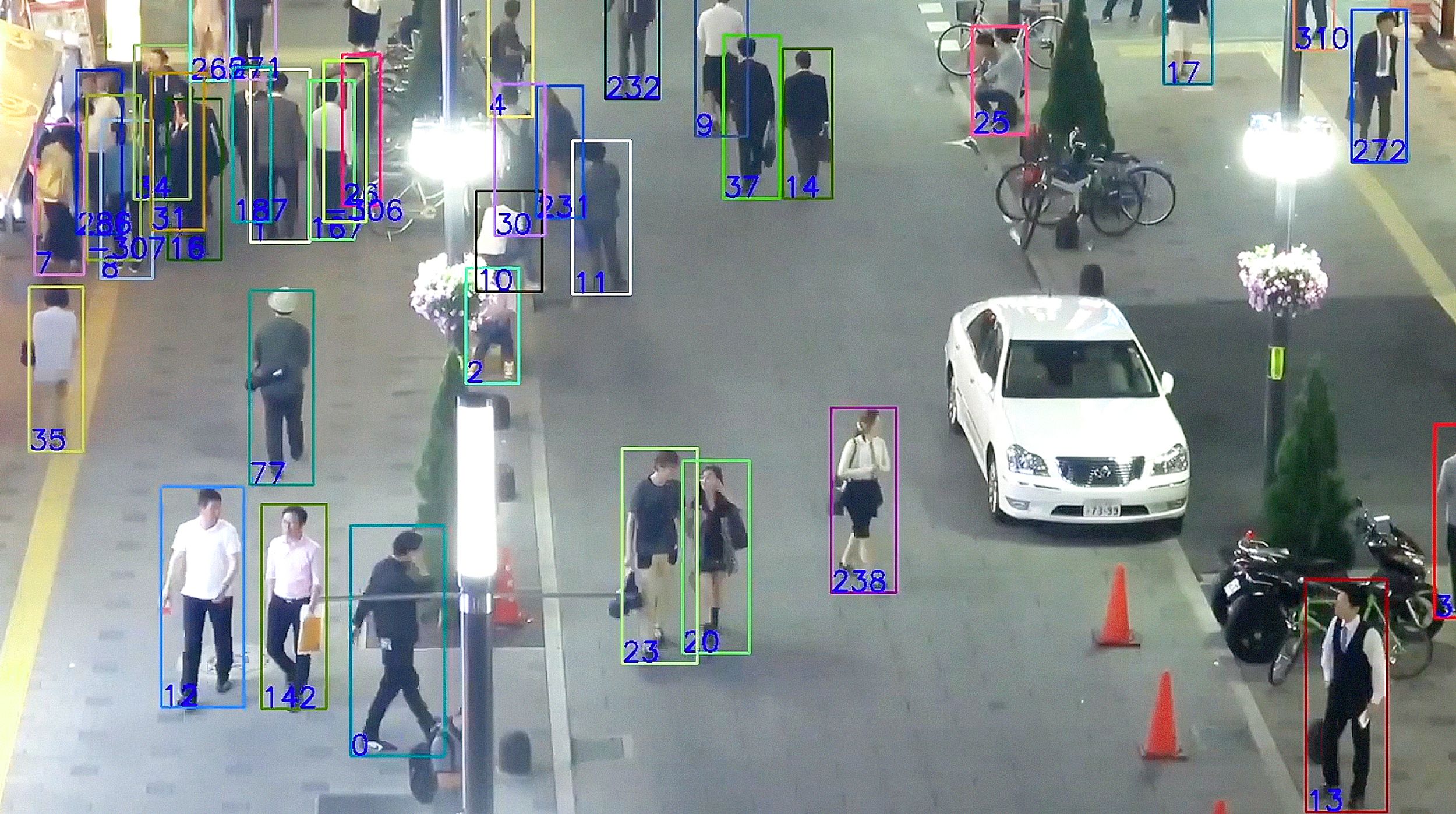
Exposing the Dark Truth of Digital Totalitarianism: Documentary 'Eyes of the Machine' Arrives in Prague as One World Film Festival Opens
Following its acclaimed premiere at IDFA Amsterdam, investigative documentary Eyes of the Machine screens at One World International Human Rights Documentary Film Festival in Prague, with Uyghur witness Kalbinur Sidik attending in person.