How Twisted Yoga Centres Care Amid a Web of Lies
An interview with Twisted Yoga director Rowan Deacon and executive producer Suzanne Lavery on their true crime doc now streaming on Apple. .
“The Romanian historical story of Bivolaru is pretty undocumented,” says Twisted Yoga director Rowan Deacon. “There isn’t a podcast, there isn’t a book. Our producer, Callum [McCulloch-Nowlan] and some brilliant Romanian journalists had to do some deep firsthand research to bring that to the fore. It involved us going to Romania and trying to unpick legal documents, so there was a lot of moving pieces.”
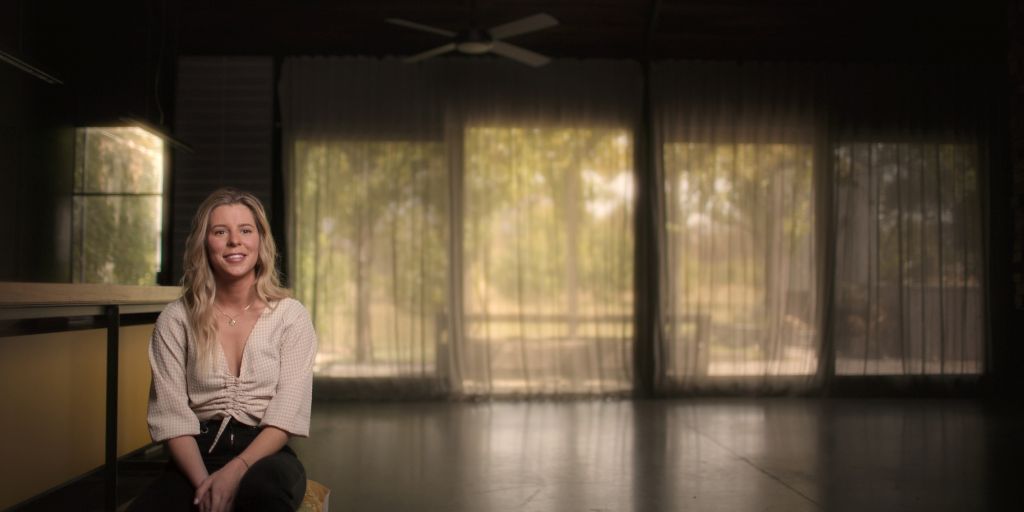
Those moving pieces resonate as the puzzle crystallizes in the true crime doc series Twisted Yoga. The three-part documentary, now streaming on AppleTV, takes audiences through the labyrinthine web of charisma and coercion plotted by Romanian yoga guru Gregorian Bivolaru. Several survivors, including Ashleigh in the first episode, recall how their hunger for meaning led them to Bivolaru’s tantric yoga movement. However, the survivors’ accounts reveal a practice that’s unconventional at best as newcomers had to enter the movement through highly secretive means. After that, initiation practices would groom them. Allegations say that women were routinely subjected to sex with Bivolaru. Twisted Yoga unfurls a community that’s less a wellness centre and more like a coercive harem.
As the story goes down one rabbit hole after another, it explodes an international web of lies and victimization across decades and in several countries. Survivors process their experiences with Bivolaru and come to recognize that the practice they considered the road to spiritual healing was actually a nefarious human trafficking ring. The doc invites audiences to witness the psychological reckoning the survivors face as they negotiate the beliefs that healed them with the acts that harmed them. The story unfolds as a captivating addition to true crime that puts the voices of the survivors at the centre while trying to understand Bivolaru’s own complicated history as files from Romania’s secret police further complicate the picture of a man who is yogi, con-man, and predator entangled in his own web of contradictions.
POV spoke with Twisted Yoga director Rowan Deacon and executive producer Suzanne Lavery ahead of its release on AppleTV.
POV: Pat Mullen
SL: Suzanne Lavery
RD: Rowan Deacon
This interview has been edited for brevity and clarity.
POV: How much of the story did you know going into production and how much of it were you discovering alongside the audience, so to speak? What was that rabbit hole journey like for you?
SL: At the very beginning, three contributors came to us via another producer, so we had an intimate knowledge of three people’s stories. We were absolutely gripped by that. But the production company that I worked for, Lightbox, we thought we had to dig into it more and do our due diligence to understand that there was a story here that would stand up and that we could bring it to the screen. A producer, Callum [McCulloch-Nowlan], came on and worked on it for months. He was Mr. Rabbit Hole, to answer your question, so he reached out to many people in different countries who had been members of different schools over the last few decades. When Rowan came on board, there was a huge body of research and a huge amount of people to speak to. Then we had to navigate our way through who wanted to speak, who wanted to share their story, who wanted to be research only. Form that, we were building a tapestry to bring the whole narrative together.
RD: We needed to build our networks through Callum’s research to find as many people that were happy to talk to us about their experiences in the school, former members all over Europe. In that process, we learned a lot. We started to build a series of testimonies that would bring the story to life. And at that point, it was really interesting because the Gregorian Bivolaru, the guru, was still operating out of Paris. In fact, we spoke to people who were seeing him very recently. The activities in Paris that the series documents was still going on. We knew that the French police were investigating, but because they were investigating, they couldn’t speak to us. It was when we filming some of our contributors in Australia that we heard that the guru had been arrested and taken into custody and indicted. Suddenly, the legal situation had shifted, and that also opened up the possibility of building a relationship with the French police and seeing if they might come on board and explain their role in this story, but it also opened up the possibility of a future trial. So, legally, everything was moving in a way that, as the executive producer, was blowing Suzanne’s brain. The editorial was shifting.
POV: What was it like being in the room with these women as they were processing what happened to them? There’s a really powerful moment late in the series where Andrea is asked about Bivolaru and culpability. You can see her working it out in her mind, and you let that mental processing play out in full. It’s interesting in the context of true crime documentary that this one really centres care and the experiences of survivors as opposed to focusing on salacious aspects of the story.
RD: I was conscious that people were at different stages in their departure from the school. One of the cult experts that we spoke to said that when people have been in high-control organizations, it can sometimes take years to disentangle themselves from an ideology. Like Andrea says, some of the ideologies and the ideas and the belief systems that she learned in the school, she still holds. That’s what’s difficult because it becomes part of you. Speaking to women who were going through that process at the time, I felt privileged and grateful for their honesty and that they were prepared to analyze themselves and reflect on their thinking, and be honest about the things that they still felt unsure about. Andrea’s honesty in that scene is wonderful because she’s still working everything out and how to disentangle.
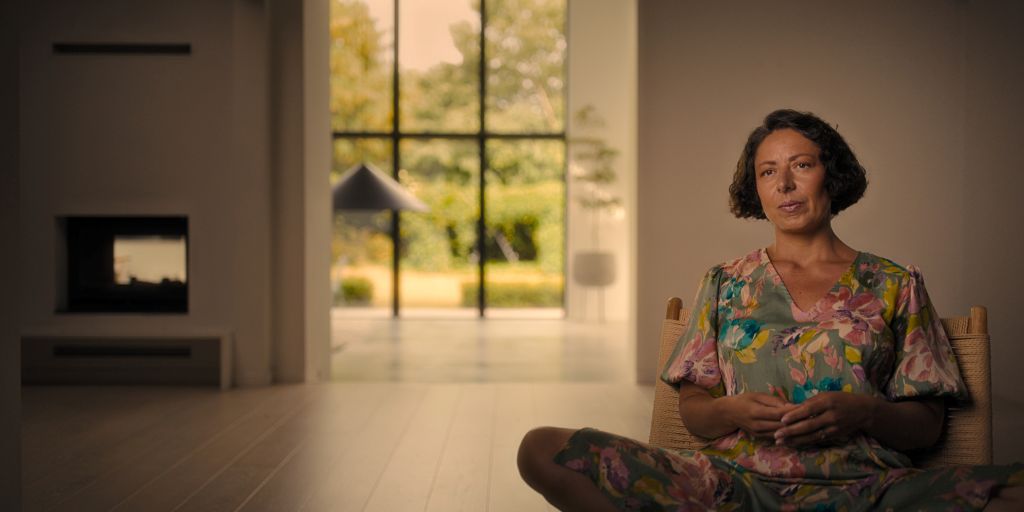
To your second question, that psychological journey that these women had so clearly been on made us realize that that’s the drama here. That’s the story. It’s not an investigative piece where the lead is the journalist or the police procedural. It’s a psychological drama where the story beats are ones that take place internally, inside these people’s minds. The crime is a psychological crime, therefore we don’t have a heist. We don’t have a getaway car. We don’t have a murder. How can we find a way of plotting this out where the audience is asked in a way to play jury?
SL: It’s interesting that the arrest was made in Paris and that this was all playing out in France because it’s one of the few countries, if not the only country, where this idea of emprise mentale [mental hold or abuse of weakness] is a crime. Psychologically controlling someone is a crime in France, but not really anywhere else, so it was interesting that things unfolded there.
RD: The notion of emprise mentale where coercive control is a crime, in a lot of countries, is in an intimate partner relationship. But it’s absolutely unique to France that there is a law where you can be charged with the psychological manipulation and control of a group. That is fascinating because it raises lots of questions about how [the law] could get exploited. It might be used to control what religious ideas were allowed to be spread. The legal system is grappling with something that’s deeply psychological and complex, and the series tries to highlight those complexities.
POV: You reached out to Gregorian Bivolaru and received a statement, but in the unlikely event that he might have consented to an interview, what would you have asked him? What does the absence of his voice lend to the film?
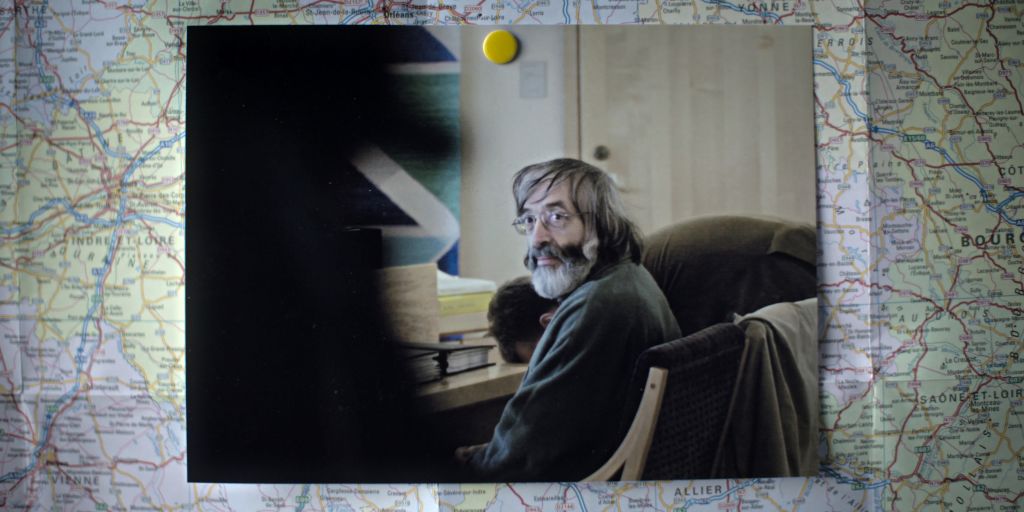
RD: We don’t know for sure because we didn’t get to interview him, but I wanted to know, “Does he believe it?” That’s what I could never know for sure. We grappled with it. We touch on it a bit when we discovered via Andreea, the journalist in Romania who goes into the Securitate files and, incredibly, she manages to find Bivolaru’s file. She finds evidence that he was actually sectioned in a psychiatric asylum in Romania. However, it’s difficult because a lot of people were sectioned under the communist regime who didn’t need to be. That was always his defense, but that did give insight into [whether] this is someone who has delusions of grandeur and really does believe his own hype. Does he believe it or is he exploited? Is he a conman or is he a delusional?
SL: We have no way of knowing. He was the enigma at the centre of the series, but we could never get to the truth of what he actually believed and what his real motivation was. It would be fascinating to know what motivates him because he spent a long time pre-arrest in Paris being dedicated to this practice. Our real focus and our interest is the journey of the women who took us on their journey.
POV: I think the idea of whether he believes it or is a con-man is felt in the series. There’s an archival interview where he sort of fumbles with the journalist and says, “I didn’t have sex with women, but I made love to them.”
RD: The thing is that he doesn’t deny the charges, right? He denies the allegations, but he’s not saying this didn’t happen. Of course this happened. And the letter that he writes to Ashley suggested to me that it’s another worldview. It’s a worldview. He truly believes that Ash is making a mistake by … I can’t say definitively, but the audience will have to come to their own conclusions.
Twisted Yoga is now streaming on AppleTV.
The post How Twisted Yoga Centres Care Amid a Web of Lies appeared first on POV Magazine.
Related Articles
Visions of the Croisette: The Ultimate Prediction for the 2026 Cannes Film Festival Main Competition
Caught between streaming algorithms and geopolitical upheaval, does cinema’s “sacredness” still matter? A Los Angeles–based team predicts the 22 Palme d’Or contenders for Cannes 2026—from PTA and Östlund to Panahi, Rohrwacher, and beyond.
The Memory Palace: Or, If These Walls Could Talk
How films like Okuirmono, The Nest, and This House explore the histories embedded within the walls of our family homes. .
Exposing the Dark Truth of Digital Totalitarianism: Documentary 'Eyes of the Machine' Arrives in Prague as One World Film Festival Opens
Following its acclaimed premiere at IDFA Amsterdam, investigative documentary Eyes of the Machine screens at One World International Human Rights Documentary Film Festival in Prague, with Uyghur witness Kalbinur Sidik attending in person.