Oscar Predictions: Who Will and Should Win the Tight Documentary Races
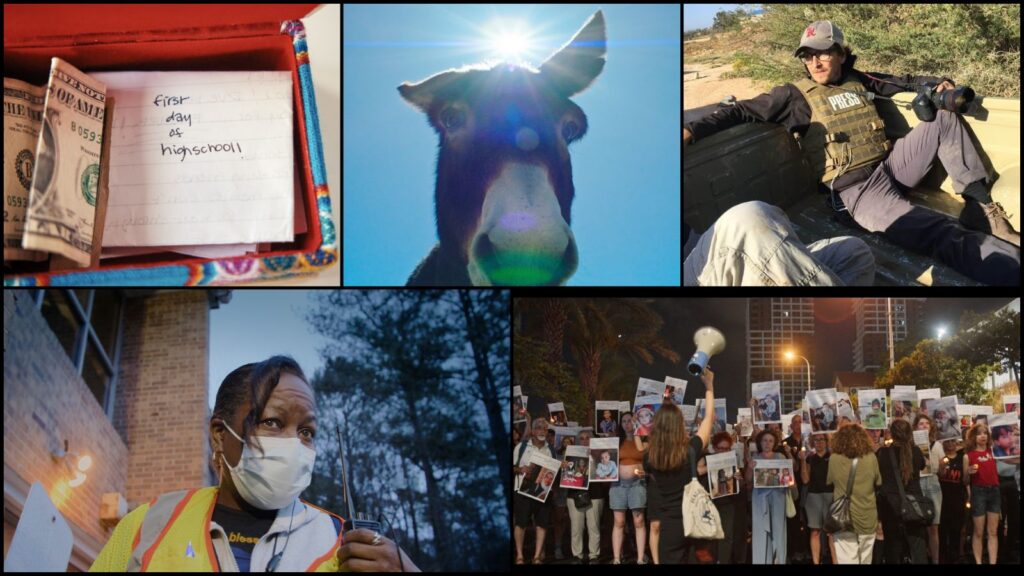
Oscar predictions and picks in the documentary races see a close call between The Perfect Neighbor, Mr. Nobody Against Putin, Come See Me in the Good Light, The Alabama Solution , and Cutting through Rocks. .
This year may be one of the most exciting Oscar nights in recent memory. Most categories in the Academy Awards race are completely up in the air. The night has few locks outside of Paul Thomas Anderson for Best Director, Jessie Buckley for Best Actress, and Sinners for Best Original Screenplay, while the documentary categories could yield some big payoffs. Those two races could go any number of ways.
The Academy has a new rule this year, which stipulates that voters must watch all the nominees in a category before voting. In a way, this rule harkens back to the earlier days of the doc branch when an out of nowhere film could win if a handful of people showed up to the right screening on a Sunday morning. However, published interviews with Oscar voters in the trades and predictions websites indicate that voters aren’t respecting the honour system on which the new rule operates. But the 35 “anonymous Oscar ballots” published around the web so far only represent 0.3% of the Academy’s 11,000 members, so take that voting sample with a grain of salt. And remember, just a few years ago, these anonymous ballots had Penélope Cruz leading the Best Actress field 17 votes to Jessica Chastain’s one before the latter went on to win the Oscar for The Eyes of Tammy Faye. Only five anonymous ballots this year shared their doc votes so far, or 0.045% of members.
If voters actually watch all the docs this year, however, it could really go any way. For one, frontrunners The Perfect Neighbor and The Alabama Solution have the most “American” sensibilities in an increasingly international membership and could also pull from the same voters’ pool. That might hurt the more-widely seen Neighbor if Alabama siphons votes from its fans. Alternatively, Come See Me in the Good Light could benefit from the sentimental value it carries with every heart it touches, while Mr. Nobody Against Putin and Cutting through Rocks both have underdog vibes and smaller campaigns that might have reduced their chances without the new rule.
Here’s a look at who’s nominated in the Oscars’ documentary feature and short docs races, followed by our Oscar predictions and personal picks.
The Alabama Solution
Nominees: Andrew Jarecki and Charlotte Kaufman
One of the most devastating films I’ve ever seen, The Alabama Solution is a stunning indictment of the corrupt system of incarceration in parts of the United States. Veteran Andrew Jarecki, whose previous films include such tough works as Capturing the Friedmans and The Jinx, has outdone himself with this powerful indictment of US prisons. Charlotte Kaufman and Jarecki have managed to penetrate one of the harshest state-run institutions in Easterling Alabama, working their way past the guards and officials to become the confidants of some of the hardened criminals who are serving time there. After six years, the directing duo have witnessed and documented the unbearably difficult treatment meted out on many Alabama prisoners, whose main goal, it appears, is survival, not rehabilitation.
Jarecki and Kaufman have become close to the prisoners through their use of illegal cell phones, which has made the film quite revealing through dialogue and sound. We hear many of the revelations about the abusive conditions inside the walls without seeing them but there are stunning visuals as well. In one upsetting sequence, one of the documentary’s key witnesses, Robert Earl Council, must chase rats out of his toilet, which is hardly the worst thing that has happened to a man who served five years in solitary confinement.
Much of the film’s narrative centres on the officially unexplained death of another prisoner Steven Davis, who was beaten to death, and, yes, the film shows his body. It’s revealed that guards killed Davis, which by this point in the film, is hardly a surprise. What is even less of a shock is the revelation that the unpaid work provided by the prisoners produces $450 million a year. That used to be called slave labour and perhaps it should be now. It certainly explains why no one, from the state’s governor to the prison officials, want anything to change. The Alabama Solution is a very impressive achievement. It’s astonishing that it was made at all. But, quite frankly, it isn’t a likely Oscar winner—it is too harsh. – MG
Come See Me in the Good Light
Nominees: Ryan White, Jessica Hargrave, Tig Notaro and Stef Willen
Whatever happens on Oscar night, Come See Me in the Good Light from director Ryan White is a winner for providing audiences two hours of poetry and grace, love and laughter, and a refreshing reminder that no matter how hard times may be, we can always find the ability to see our partner’s best self. This portrait of poets Andrea Gibson and Meagan Falley achieves a masterstroke that too few documentaries do: It tackles two tricky subjects – terminal cancer and stand-up poetry – that sound like total homework on paper, but it brings them together for an unexpectedly funny and life-affirming experience. The film gets a lot of credit for giving Gibson’s poetry a wider platform, especially as they died in July 2025 at the age of 49. The doc’s message about the poetry of life resonates even stronger.
What’s sometimes lost in the focus on the content is the skill of the filmmaking here. This documentary reflects a remarkable feat of access, intimacy, and relationship building to get these moments inside Gibson and Falley’s life together. Moreover, the doc walks a nimble balancing act, which speaks to the quality of the direction, cinematography, editing, and score as it navigates so many feels without being melodramatic. Academy members often vote with their hearts outside the documentary category, so the “newsworthy” bias that often leads timely docs to win here may work against Come See Me in the Good Light. However, in a polarised climate against LGBTQ+ rights, it’s refreshing to see a portrait of a queer person dying for reasons other than AIDS and cancer, afforded dignity and care. Look at the list of audience awards in its favour as the top vote getter at numerous festivals including Sundance and Hot Docs, plus Best Doc prizes at the Cinema Eye Honors, GLAAD Media Awards, and others, and there’s reason to hope that Come See Me in the Good Light could tug voters’ hearts in the right direction. – PM
Cutting through Rocks
Nominees: Mohammadreza Eyni and Sara Khaki
I get a kick out of those anonymous Oscar ballots. Most recently, “Brutally Honest Oscar Voter #1” in The Hollywood Reporter shared this nugget: “Cutting through Rocks is the kind of film that the doc branch has been celebrating too much in recent years — it’s not extremely well-made, it underserved its central character and it lacked gravitas.” Unfortunately, that sentiment echoes a lot outside the Academy bubble. Cutting through Rocks exemplifies the shifts in the doc branch, both in terms of international scope and political bent. It’s not a sexy nomination and may feel like homework between Sinners and Hamnet. However, the nature of documentary distribution (or lack thereof) means that films like Cutting through Rocks with worldwide festival reach will perform better with the doc branch. Moreover, Cutting through Rocks reflects the branch’s unwritten impulse to boost the underdogs and give the platform to undistributed films.
Cutting through Rocks may be the most conventional production in the category by a mile, but it’s hard to argue with the recognition and the film’s sparse cinéma vérité affords it respectable access to politician Sara Shahverdi and the remote patriarchal community in Iran in which she makes a successful bid for public office. Mohammadreza Eyni and Sara Khaki find in her a great character who speaks to the moment. That brutally honest Oscar voter perhaps just needs a rude awakening about western bias. A Sundance Grand Jury Prize win and a Directors’ Guild of America nomination, not to mention numerous festival accolades and perhaps the widest circuit run of the doc nominees, offer fair evidence that the industry agrees that less can be more. – PM
Mr. Nobody Against Putin
Nominees: David Borenstein, Pavel Talankin, Helle Faber and Alžběta Karásková
With an Oscar nomination to go along with prizes at the BAFTAs and Sundance, it’s now official: Pavel “Pasha” Talankin is no longer a nobody. He’s the human face of resistance against Putin and, in many ways, all the other autocrats who rule too much of the world. What’s most remarkable about him is how unassuming he appears to be. If you were to cast someone as a Le Carré spy, it would be Talankin, who looked like a mildly eccentric nerdy teacher at a Russian primary school. That proved to be a great cover for him to take highly revealing footage of how Putin’s dictatorial machine operates even in the hinterlands of the Urals.
Mr. Nobody Against Putin is a classic narrative in which a naive protagonist unexpectedly discovers their power. Talankin really was shocked when he saw his school change into an institution used to create and dispense propaganda for Russia’s so-called “glory” and, even worse, its unprovoked attack on Ukraine. Luckily, as the school’s videographer, he was able to document what was happening—ostensibly for the government, but truly as evidence of their manipulation of students and faculty to bend to their will. Talankin’s videos show the ridiculousness of the “patriotic displays” that are forced on the school; so are the essays the children are made to write extolling Putin and his system.
By the time Talankin assembles enough evidence to expose Putin’s fraudulent agitprop promotions and decides to leave with material for the West to see, he has genuinely moved into espionage thriller territory. With the help of director David Borenstein, he becomes a spy who must come out of Russia’s cold and into the warm embrace of film festivals and true documentarians worldwide. Mr. Nobody Against Putin is a wonderful film that shows how integrity can still exist even in these benighted times. – MG
The Perfect Neighbor
Nominees: Geeta Gandbhir, Alisa Payne, Nikon Kwantu and Sam Bisbee
Here’s the conundrum with presumed frontrunner The Perfect Neighbor: voters nominated more or less the same film, Incident, in the shorts category last year and it lost. However, on paper, it might be foolish to bet against this truly exceptional doc directed by Geeta Gandbhir. Like Incident, The Perfect Neighbor mines a trove of contemporary archival footage—police body cameras, dashboard cams, surveillance video—to piece together a brutal crime and the systemic failures that enabled it. Sourcing this material and creating a narrative from it is not an easy feat. The Perfect Neighbor delivers a wallop of a gut punch as it shows a community terrorized by a neighbourhood Karen and a mother who died senselessly and tragically by her hand. It’s a damning indictment of Florida’s stand your ground laws.
The Perfect Neighbor also happens to be the biggest streaming sensation on the documentary front since Tiger King. The Netflix smash presumably has the most name recognition across the Academy. Gandbhir, a veteran editor best known previously for her Peabody Award winning work with Spike Lee, shows ingenuity as a director who knows a lot about the art form by cutting the work of others. She probably won the first round vote with the doc branch and will likely benefit further from the film’s popular appeal. The doc’s also been the most widely recognized work among the nominees with a directing win at Sundance, Best Documentary at the Spirit Awards, a slew of Critics Choice Awards – which I don’t put much stock in, but think offer a fair comparison to the full Academy membership that watches relatively few docs – and then nominations at the Directors’ Guild, Producers’ Guild, and BAFTAs, along with a slew of critics’ prizes. It’s a hard film to deny. – PM
Will win
Marc says: I was on the fence on this one. I really love Come See Me in the Good Light and Mr. Nobody Against Putin, but Pat has persuaded me that The Perfect Neighbor is the winner. It’s really well made and a scary but persuasive slice of Americana. It’s a very good year for docs and Gandbhir, nominated in shorts and features, is a worthy choice.
Pat says: I’m not nearly as big a fan of The Alabama Solution as Marc is. The subject matter is significant, but the nature of the lo-fi clandestine footage shot on consumer cell phones doesn’t make for superior viewing, even in a home theatre. It’s not a pleasant watch, either. I think more members are likely to bail on it than vote for it, although it could siphon some of The Perfect Neighbor’s support. I’m not especially confident, but only The Perfect Neighbor hit all the key precursors. In many cases, though, it lost the ones that overlap with Academy membership: the Directors and Producers’ Guild Awards and, most notably, the BAFTAs. The guilds went to docs that aren’t even nominated here, 2000 Meters to Andriivka and My Mom Jayne, respectively, while the Brits awarded Mr. Nobody Against Putin. The latter seems to be gaining the most heat, but I think The Perfect Neighbor started way out in front and also benefits from its resonance in the contemporary political climate to edge out a worthy win. Come See Me in the Good Light is the wild card.
Should win
Marc says: I guess it’s the nerd in me that makes Mr. Nobody Against Putin my personal favourite. I love the idea of a schoolteacher turning into an activist. To me, Pavel Talankin is a real hero and deserves an Oscar for bravery and showing what a true citizen should do: fight the enemies of democratic free expression.
Pat says: Surprising nobody, I’m rooting for Come See Me in the Good Light. I can’t thank the team enough for this one.
The Short Docs
All the Empty Rooms
Nominees: Joshua Seftel and Conall Jones
This Netflix doc directed by recent nominee Joshua Seftel (Stranger at the Gate) offers a devastating portrait of the losses chalked up to gun violence in America’s schools. The film observes journalist Steve Hartman and photographer Lou Bopp as they complete a portrait series of the bedrooms left behind by children killed in school shootings. -PM
Armed with a Camera: The Life and Death of Brent Renaud
Nominees: Craig Renaud and Juan Arredondo
This sentimental favourite sees filmmaker Craig Renaud pay tribute to the life and work of his brother Brent, a documentarian who was killed covering the invasion of Ukraine. Renaud’s footage from conflict zones offers remarkable evidence of the sacrifices that journalists make, even if the doc lacks the overall finesse of the other nominees. -PM
Children No More: “Were and Are Gone”
Nominees: Hilla Medalia and Sheila Nevins
Tip the hat to Oscar voters for recognizing this look at Israeli activists. The film observes their demonstrations that draw attention to the countless children from Gaza and the West Bank killed during the ongoing genocide in Palestine. Director Hilla Medalia and veteran producer Sheila Nevins deliver the kind of fearless work that only old pros could make. -PM
The Devil Is Busy
Nominees: Christalyn Hampton and Geeta Gandbhir
Moody and atmospheric, this film manifests its power through its sympathetic characterization of Tracii, the head of security at an abortion clinic in Atlanta. Through voice-overs and a quietly observant visual strategy we see what the daily drama of functioning in a tense environment is like for the workers and patients. Tracii’s spiritual approach makes a stark contrast to the anti-abortion protesters whose voices are also a significant part of the mix. A solid and moving film on a very controversial subject. – MG
perfectly a strangeness
Nominee: Alison McAlpine
Beautifully made, this Oscar nominee is truly a strange and mysterious film. From the glint of the eyes of a trio of local donkeys to the glimmer of the stars seen glistening in the skies after night falls, this is a wondrous film. Wordless, McAlpine’s spry, curious camera follows the donkeys as they encounter an abandoned astronomical observatory in the Chilean desert. The contrast between the quotidian existence of the harmless creatures on sand and the luminous skyscape couldn’t be greater. This is a film to ponder and enjoy. – MG
Will win
Marc says: Armed with a Camera: The Life and Death of Brent Renaud is a truly moving film about two tragedies: the on-going terrible war in Ukraine and the loss of a courageous journalist. I think that Oscar voters will choose to honour someone else in the media—the late Brent Renaud—for paying the ultimate sacrifice to bring an important story to the world.
Pat says: All the Empty Rooms. It’s a stunning doc that makes an emotional argument to further an intellectual one about the senselessness of gun violence. If Come See Me in the Good Light makes you cry, wait’ll you see this one!
Should win
Marc says: Is Alison McAlpine’s perfectly a strangeness truly a doc or is it an experimental film? Who cares? It’s a wonderful enigmatic cinema poem and deserves what it won’t get: an Academy Award. Kudos to McAlpine for her curious and exemplary vision.
Pat says: I have to go with the home team and root for Alison McAlpine’s perfectly a strangeness. The most “artistic” doc never wins in this category, but it amazes me how much this dialogue-free film manages to say by observing a few donkeys as they embark on a Quixotic quest. There’s nothing quite like it!
The post Oscar Predictions: Who Will and Should Win the Tight Documentary Races appeared first on POV Magazine.
Related Articles
Visions of the Croisette: The Ultimate Prediction for the 2026 Cannes Film Festival Main Competition
Caught between streaming algorithms and geopolitical upheaval, does cinema’s “sacredness” still matter? A Los Angeles–based team predicts the 22 Palme d’Or contenders for Cannes 2026—from PTA and Östlund to Panahi, Rohrwacher, and beyond.
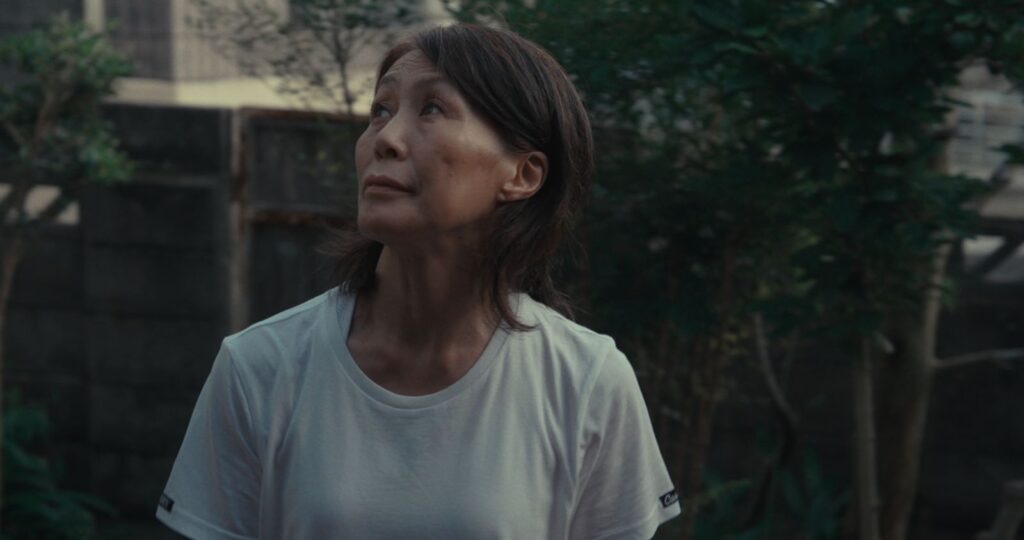
The Memory Palace: Or, If These Walls Could Talk
How films like Okuirmono, The Nest, and This House explore the histories embedded within the walls of our family homes. .
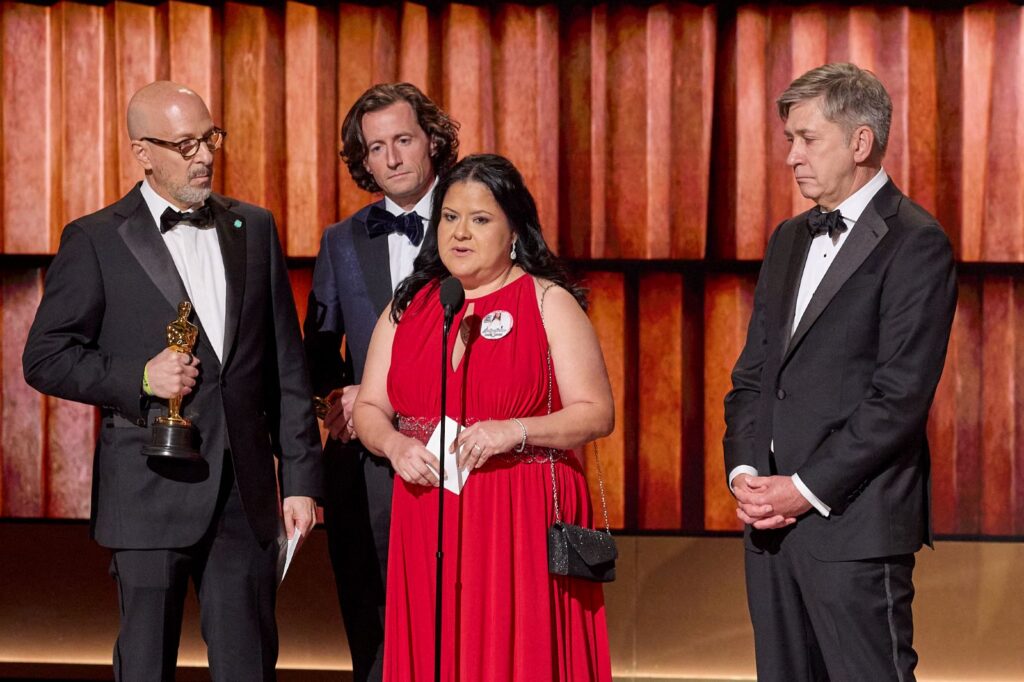
Documentary Winners Inject Political Messages into Oscar Night
Mr. Nobody Against Putin and All the Empty Rooms win Oscars for Best Documentary and Best Documentary Short Film, respectively, while NFB scores its 13th Oscar. .