The Theft Review: Reclaiming Afghanistan’s Cultural History
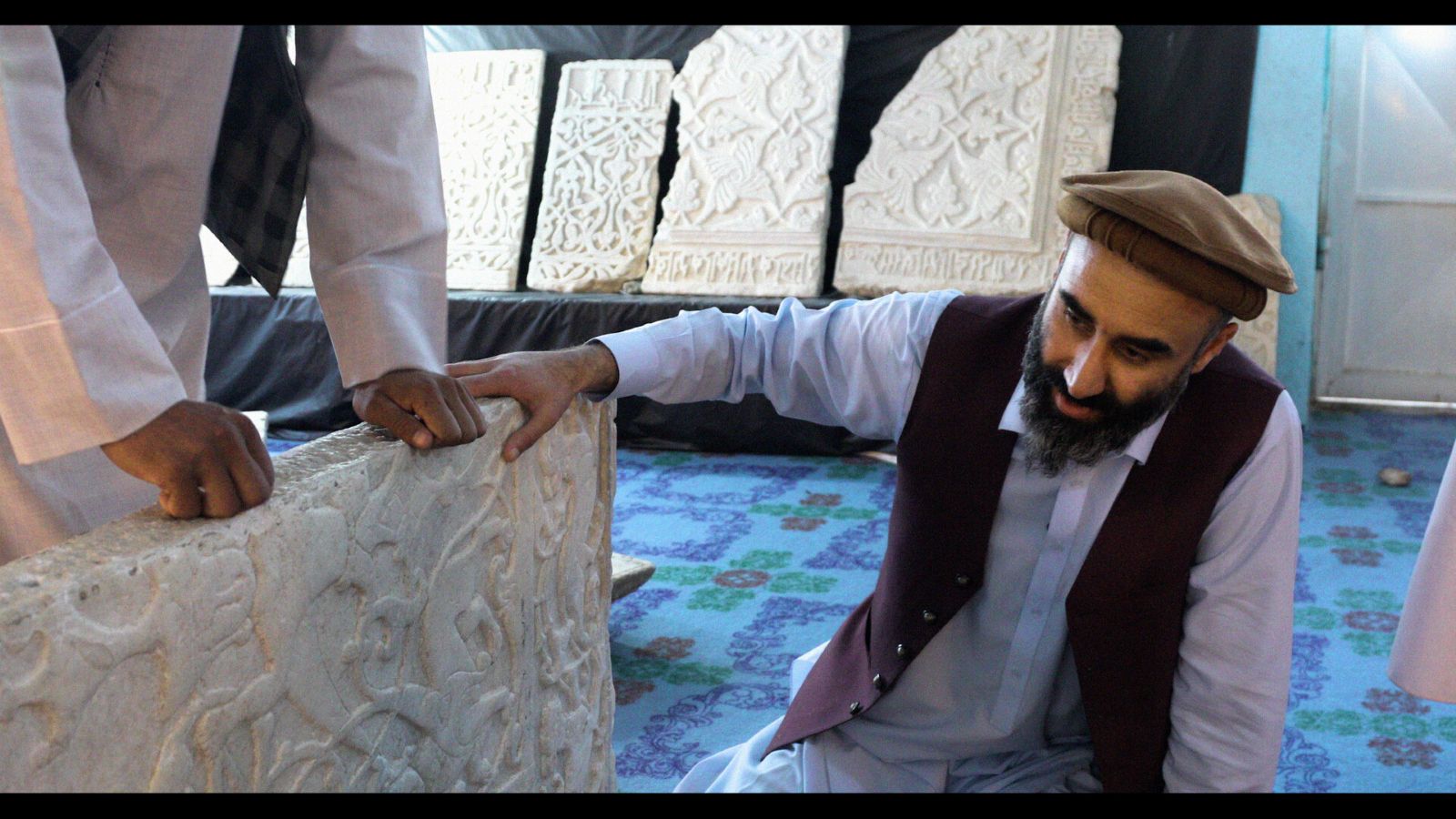
Efforts to repatriate artifacts and artworks stolen from Afghanistan invite wider considerations of cultural history in Aisha Jamal's The Theft . .
The Theft
(Canada, 85 min.)
Dir. Aisha Jamal
Prod. Ed Barreveld
Museums expose a visitor to a world of cultural riches and history. However, the paintings and artifacts on display all too frequently have histories that aren’t told in the curatorial notes that accompany them. What’s often missing are the stories about how artifacts came to be housed behind glass in one country after being created in another corner of the world. One can’t help but look at these pieces a little differently knowing how often they enrich one culture by robbing another.
In The Theft, director Aisha Jamal (A Kandahar Away) looks at the complicated history of artifacts stolen from her native Afghanistan. The theft of Afghanistan’s cultural history feels especially significant when so much of the narrative around the country reflects years of war and Taliban rule. Both factors obviously contribute to the erasure of arts and culture, but efforts to repatriate Afghan artifacts speak beyond reconciliation efforts made by returning objects taken amid colonial exploitation. To return and to elevate Afghan art not only restores the past, but it corrects a narrative that continues to be written in the present.
Of particular interest to Jamal are several 12th century Ghazni Marbles. These panels from the palace of Sultan Masu’d III are large and beautifully carved pieces that adorned the palace, the construction of which was completed in 1112. Over 1000 years’ later, historians and curators hope to bring these panels home, as many of the excavated pieces stand in museums and archives around the globe—or, in one case, rests on an embassy floor.
Throughout the film, Jamal presents images of select panels with notes of their provenance—basically the lineage of ownership used to verify and appraise artworks. One striking aspect of these records is the sum attached to the panels. The museums don’t particularly assign much monetary value to the panels with records noting sales that reach only a few thousand dollars, or maybe up to $10K depending upon the size, complexity, or state of the piece. In the grand scheme of things, these pieces hold less significance to the valuation of the museums’ archives than they do the priceless worth they derive by coming home. They can provide some closure for a nation that must continually seek out fragments of its past.
The Theft traces the stories behind these panels as curators and historians reflect upon what it means to assemble ethically sound exhibitions with cultural artifacts, even if that just means acknowledging art as stolen culture. Close to home, The Theft finds a key figure in Toronto-based Afghan historian Jawan Shir Rasikh. He splits his time between his native homeland and his adopted one while leading the Afghanistan Research and Evaluation Unit. He travels to locations across Afghanistan and examines relics and sites of cultural theft. Meanwhile, Canadian-Pakistani artist Sameer Farooq shares his own artistic practices reimagine the curatorial process. He readies an exhibition in Halifax to directly confront the colonial history of curation.
The film also finds a strong presence in Mohammad Rahim Fahini of the National Museum of Afghanistan. He speaks to the personal challenges of protecting the archives during transitional years and then during the return of Taliban control in August 2021. His perspectives speak to the personal risks entailed within preserving cultural history, straddling dynamics of exile and return, when the Taliban views the arts as a tool for corruption. The Theft deftly weaves the story of the 2021 takeover within the efforts to repatriate the panels, acknowledging one reality while turning the lens towards aspects of the nation overshadowed by war. But the 2021 takeover further complicates the repatriation efforts. Returning the artifacts becomes an increasingly costly and precarious affair for which nobody agrees to take responsibility.
The film also incorporates a history of self-representation into its design. Echoing in some ways Ariel Nasr’s The Forbidden Reel, which showcased film archives thought lost to the Taliban, the film parallels the efforts of the historians and curators who seek to resituate lost works. Archival photographs and film images show not only many lost statues and artworks in their original locations, but there are also vibrant images of daily life across decades. This spirit is what the repatriation efforts seek to reclaim. It’s also the spirit that many of the voices in the film hope to be recognized as these artifacts in museums either at home or abroad: an acknowledgment of what’s lost, but also what’s gained when cultural history is respected in its proper context.
The Theft screens at Hot Docs Ted Rogers Cinema on March 11 as part of the Doc Soup series.
It airs/streams on TVO April 19.
The post The Theft Review: Reclaiming Afghanistan’s Cultural History appeared first on POV Magazine.
Related Articles

The Memory Palace: Or, If These Walls Could Talk
How films like Okuirmono, The Nest, and This House explore the histories embedded within the walls of our family homes. .

Now Streaming: The Nest Explores Layers of History Housed Within a Home
Now streaming from the National Film Board of Canada, The Nest explores layers of history that intersect within a Winnipeg Victorian manor. .

The Story of Documentary Film Review: The Art of Documenting Documentaries
The Story of Documentary Film sees Mark Cousins chronicle the history of cinema in his signature fashion with this look at the art of non-fiction film. The post The Story of Documentary Film Review: The Art of Documenting Documentaries appeared first on POV Magazine.